


On June 11, a record 48 teams began their campaign at the 2026 FIFA World Cup, an expansion of the format that previously involved 32 countries. From well-established favourites like Spain and Argentina to the unlikely stars of Cape Verde and DR Congo, the increased size of the competition was slated to pull a larger viewership than ever before.
That’s before the setting is even taken into account. With matches taking place in the United States, Mexico and Canada, the tournament drew significant interest long before any kick-off — particularly when it came to the travel situation for fans and even teams and match officials hoping to enter Donald Trump’s America, amid heightened geopolitical tensions in several regions.
And it didn’t even start there. Before all the teams had been confirmed for the tournament, FIFA’s dynamic pricing model for tickets, and the governing body’s official resale platform that appeared to have no upper price limits, also came under intense scrutiny.
With the tournament now underway in earnest, much of the conversation has moved back to football. There’s no passion like that of the teams representing their countries, and the fans filled with national pride at seeing their heroes perform on the world stage.
However, as with any major social media event, fact-checkers are coming up against recurring types of content. AI-generated fakes and other edited materials abound, spanning the whole spectrum of topics from purely football rivalry to political commentary, and even materials of a sexually suggestive nature.
No, a Hitler lookalike was not in the crowd at Germany match
Images purporting to be screenshots from the live feed of Germany’s match against Curaçao showed a spectator in a Germany jersey who bore a striking resemblance to Adolf Hitler.
The picture was shared on multiple platforms, and racked up millions of views. It appeared in several languages; as well as English, posts with the picture were found by DW in Spanish and Russian.
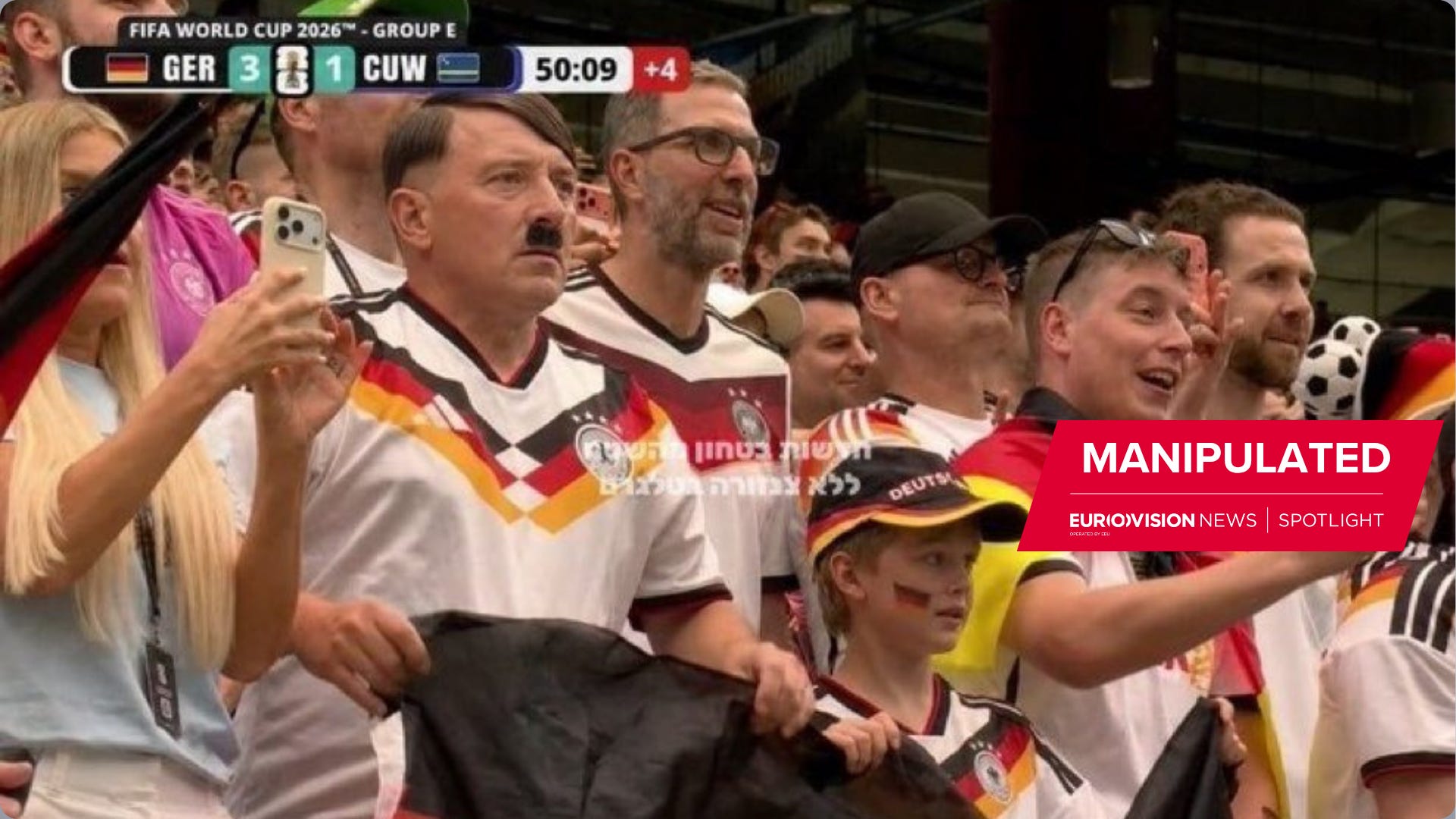
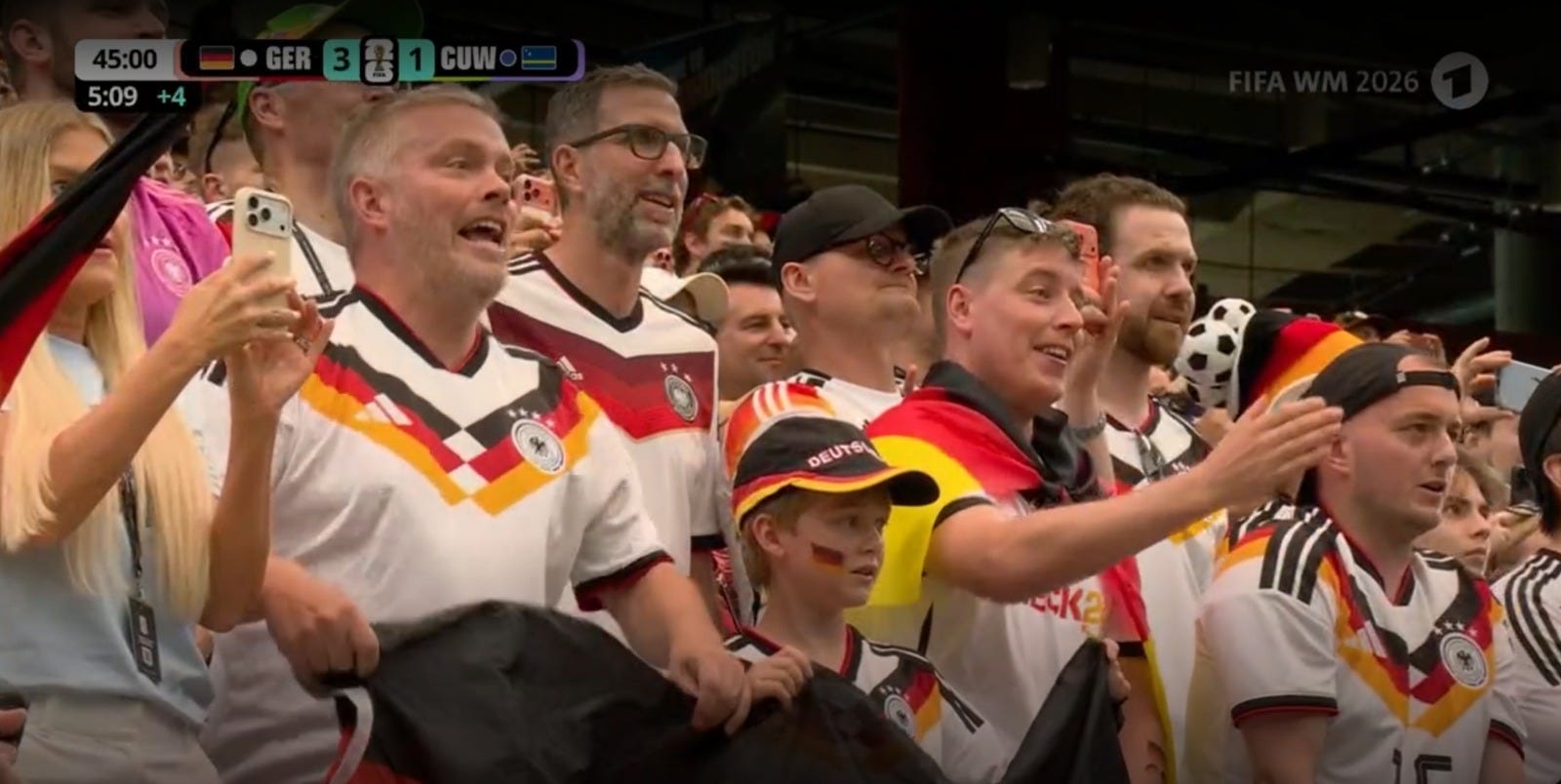
Since the still was apparently from a televised event, it was pretty easy to check. An initial red flag was the match clock visible in the top left of the frame, which showed the time as 50 minutes plus an additional four minutes (a timing convention that usually appears at 45 minutes or at 90 minutes, when additional time is added at the end of a half.) However, further checks were needed to allow for the possibility that some broadcasters could be letting the clock run on alongside the additional time at the end of the first half.
The best way to check this is, of course, to play back the match. Luckily, in this case, the crowd shot this image draws on was easy to find, as it did come near the end of the first half. This still shows what was really shown on television during this fan shot.
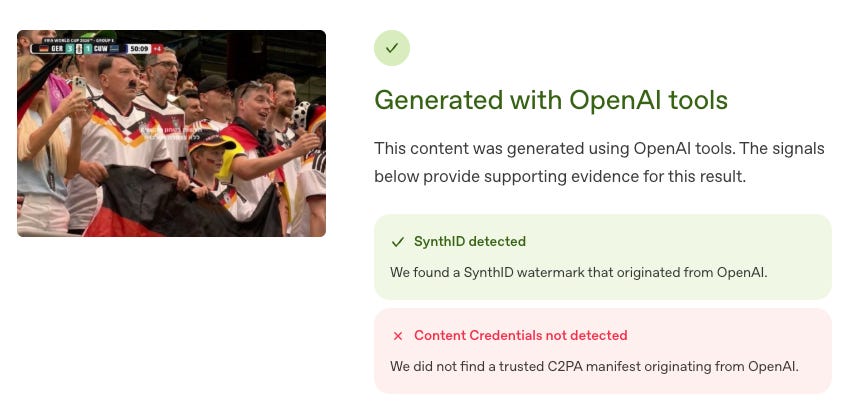
But how can we tell if the image was made with AI? In many cases, there is no definitive way to verify AI usage besides thorough, traditional verification methods. But some AI companies, like Google and more recently OpenAI, have introduced tools to detect watermarks in material generated by their own systems.
ZDFheute ran the image through these detectors, and found that it does indeed bear a watermark for OpenAI, meaning that it was altered with the company’s tools, although based on a real image.
Read our members’ reporting:
DW: Fact check: Hitler look-alike at Germany’s World Cup match?
ZDFheute: No, there was no fan dressed as Hitler at the Curaçao game
RTVE: This Hitler-looking spectator didn't watch Germany-Curaçao, he's AI
AI-generated ‘honey shots’ go viral
Clips of female fans in the stands at World Cup matches were going viral, apparently capturing everyone’s attention because of the women’s almost inhuman beauty.
And inhuman they are. The women are AI-generated, and form part of a wider trend of AI clips of fans inside stadiums as the matches got underway.
It’s not enough to confirm that these women are AI-generated; the purpose of these videos is far more interesting as they give us an insight into a wider industry built on AI influencers and even pay-per-view adult content generated by AI, writes Grégoire Ryckmans from RTBF.
Among the most viral of these clips is a purported Brazilian fan, with a man sitting beside her staring at her cleavage. The video was widely reshared in multiple languages, including English, Spanish, and French.
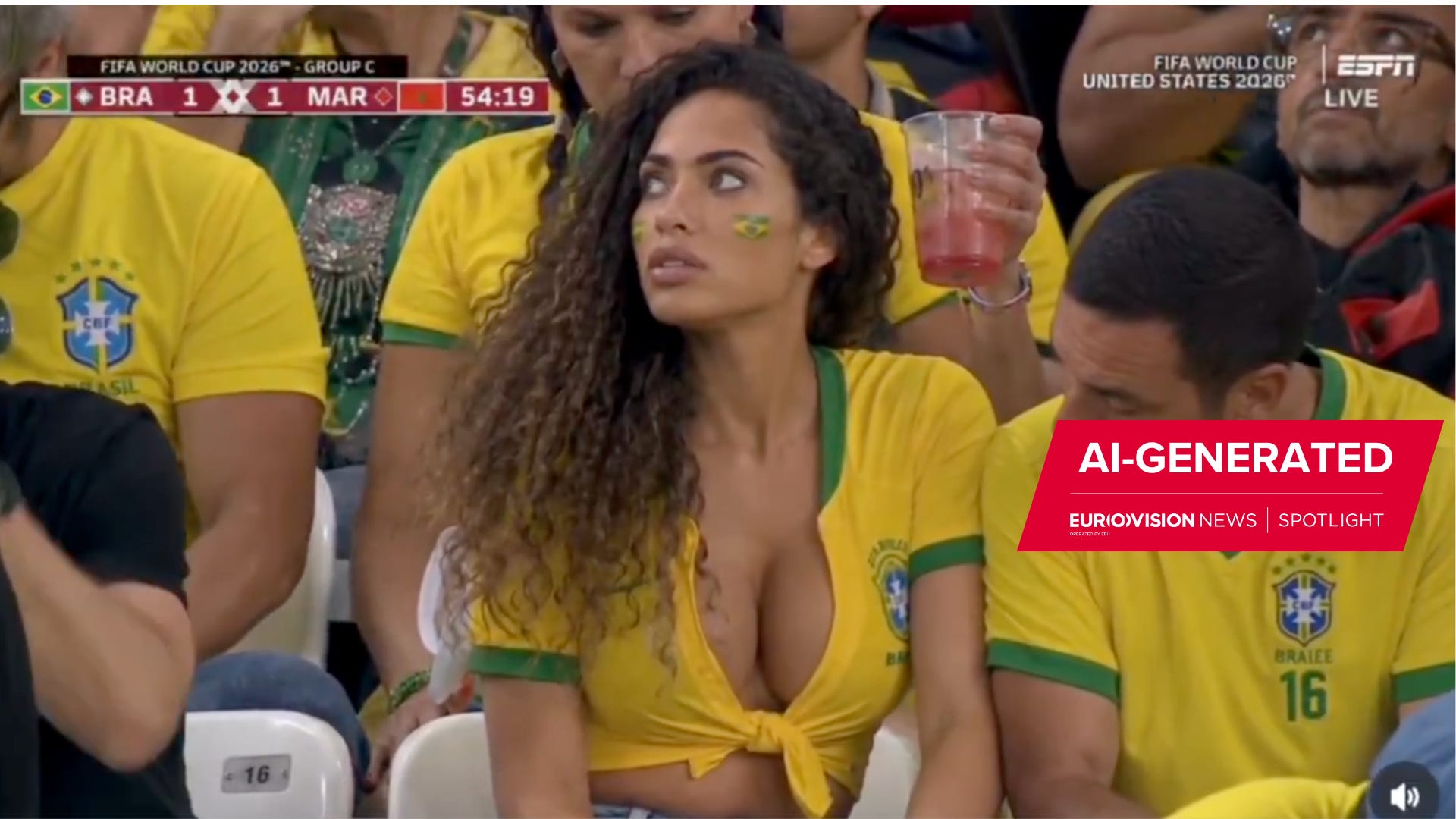
Eurovision News Spotlight found the original video on Instagram, posted by a user called ‘Chiara Cleo’, which had garnered close to 40 million views. Her other videos show that it is the same consistent persona being posted on this profile, but she is an AI influencer. Most of Chiara Cleo’s content shows her walking through malls in tight clothing, or making comments with overt sexual innuendo.
RTBF followed this influencer’s digital footprint further, and found that her profile linked to a Fanvue page — a platform for erotic content comparable to OnlyFans. More than 340,000 people follow Chiara Cleo on Instagram, and judging by the comments on her videos, many imagine her to be a real person.
VRT debunked a number of other images showing female AI-generated Belgian, German and Paraguayan fans.
The phenomenon of a camera picking up an attractive supporter is not a new one. At the 2018 World Cup, broadcasters were warned by FIFA to stop zooming in on “hot women” for what are known as “honey shots”, with the governing body saying it needed help to tackle sexism in football.
Read our members’ reporting:
RTBF: World Cup: These images of young women in stadiums are AI-generated
VRT: ‘World Cup babes’ created with AI: this fake news about the World Cup is making the rounds
ORF: Manipulated photos: AI-generated images of scantily clad fans cause a stir
Exaggerations of Cape Verde’s real heartwarming story
After Spain’s surprising 0-0 draw against tournament underdogs Cape Verde, legends began to be spun online about just how humble the squad’s origins were.
The spirit of the stories illustrated just how significant it was for the Cape Verdean players to hold off tournament favourites Spain — but many of the details were incorrect.
One of the heroes of the match was Cape Verdean goalkeeper Vozinha, who was making his World Cup debut at 40 years old. Multiple viral posts on social media called him an electrician and a bus driver, suggesting he played football as a part-time endeavour.
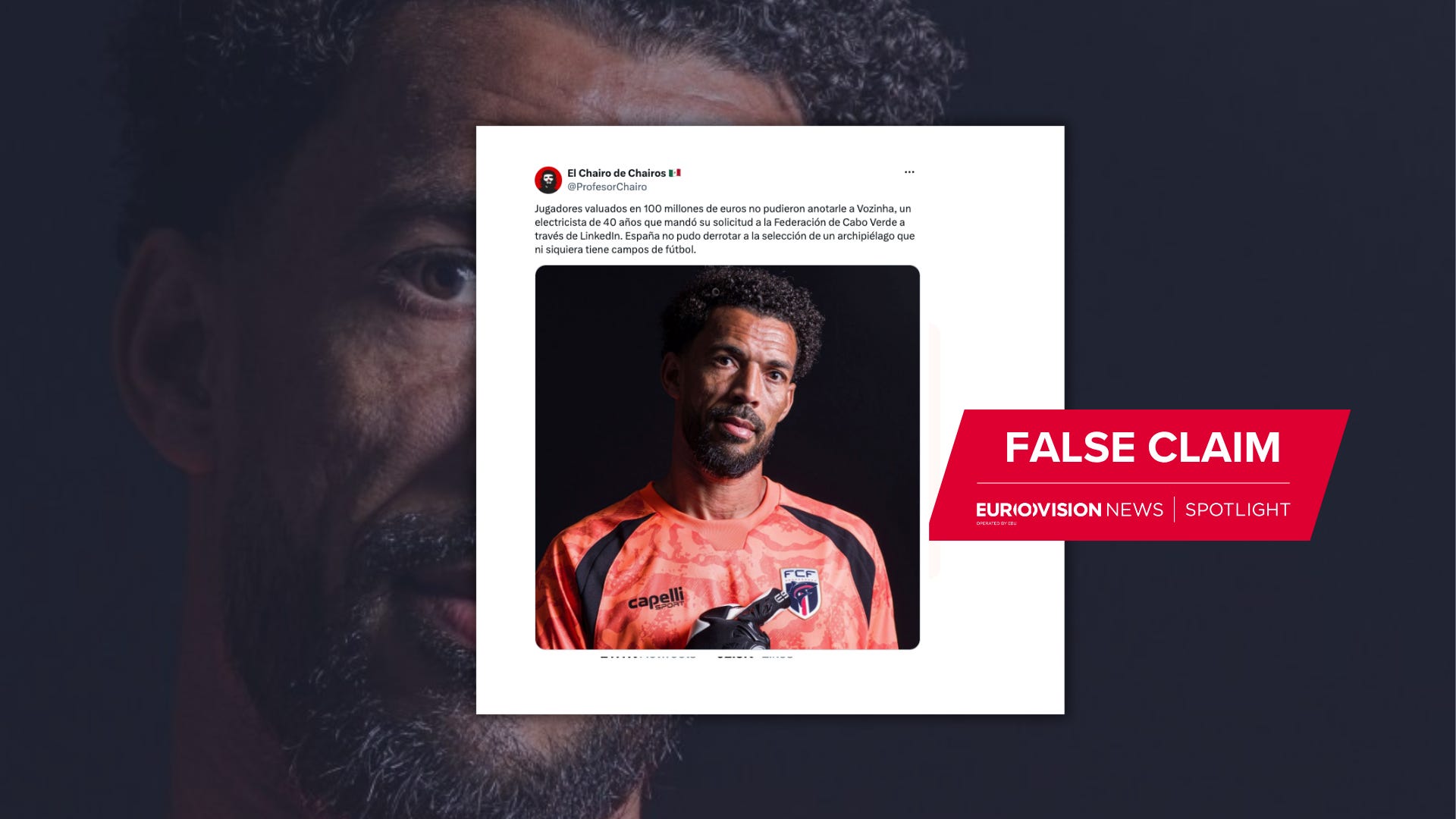
In fact, Vozinha plays professionally in Portugal’s second division, and has had a long senior club career going back almost 20 years in countries including Angola, Moldova, Slovakia, and Cyprus.
While he may have held other professional jobs in his adult life, there was no evidence that Vozinha was working as an electrician, VerificaRTVE reported. Another claim that there aren’t even football pitches in Cape Verde held no water: there are a number of small stadiums in Cape Verde, without even counting smaller scale playing grounds.
Another of the tales around Vozinha was that he was recruited for the national team via LinkedIn. The Cape Verdean football association did indeed recruit one of its players on LinkedIn, but this story is about Roberto ‘Pico’ Lopes, an Irishman with Cape Verdean heritage who was identified as an eligible player by the country’s federation. In a tribute to the LinkedIn story, Pico Lopes posted on the platform after his appearance for Cape Verde, writing: “LinkedIn to World Cup”.
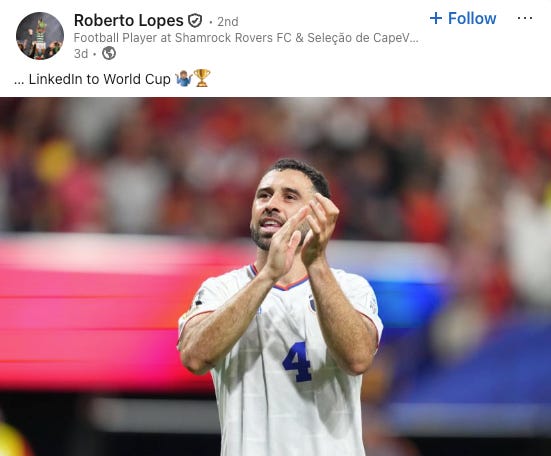
As for Pico Lopes, claims that he was working in a bank before he left his job to play in Ireland’s League of Ireland — and later for Cape Verde’s national team — are true.
Irish broadcaster RTÉ published a heartwarming video showing Lopes reading a letter from his manager at Shamrock Rovers, in which the club boss says: “It seems a long time ago now, and it is, when we first sat down to talk about you leaving a good solid job in the bank and joining us at Rovers to try deliver a success on the pitch. I know it was a risk, but we both knew that it was one worth going for, and time has proven us right on that.”
Read our members’ reporting:

In other news…
Franceinfo: Are robot dogs really patrolling some streets in the United States?
RTVE: Iranian footballer Mohammad Mohebi has not been deported for his goal celebration
RTVE: Iran did not bring backpacks to the World Cup for tribute to girls in Minab
Franceinfo: ‘Even more expensive, even more premium’: the highly opaque “dynamic pricing” of World Cup tickets
RTVE: It's not Keir Starmer in a Croatia shirt during the match against England, it's AI