


Claims that there was election fraud or rigging in a state election in Germany at the weekend were not backed up by any evidence, according to fact-checkers in the Eurovision News Spotlight network who analysed a number of themes circulating on social media.
Sunday saw the state of Saxony-Anhalt hand a decisive victory to the Alternative für Deutschland (AfD) party, parts of which are classified by German authorities as “right-wing extremist”. The election is being reported as among the most consequential for the country in years, and could lead to the first far-right state government in Germany since the 1940s.
Fake news was observed in the lead-up to state and local elections in Germany, which was understood to be part of the wider Russian ‘Matryoshka’ influence operation, also known as Operation Overload or Storm-1516.
The AfD is widely characterised as pro-Russian, advocating for closer ties and economic cooperation with Moscow while opposing sanctions and military aid to Ukraine.
Claims of election fraud
The closely watched vote came with plenty of online disinformation. Deutsche Welle fact-checker Josh Axelrod reported on a number of cases, including one video that supposedly showed election workers destroying AfD ballots, which was actually staged.
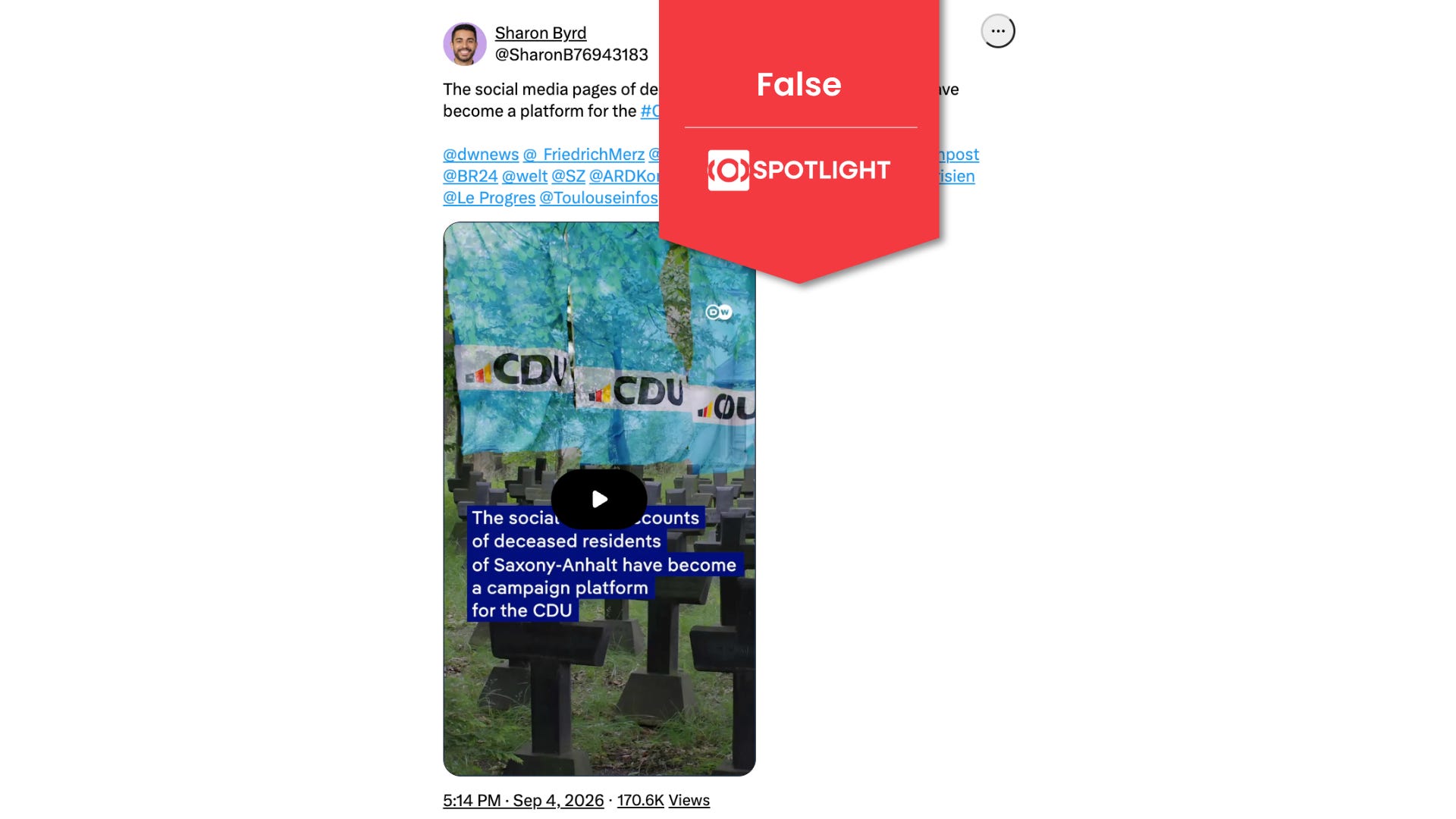
Another incident involved circulating videos claiming that the Christian Democratic Union (CDU) was engaging in fraud by using the social media pages of deceased voters for their campaign or using a database of Nazi soldier names to register fake ballots. None of it was true.
The videos featured the logos of reputable news outlets like DW, ARD, and BBC, but had never been published by those organisations. One of the clips even claimed that a disinformation reporter had “obtained evidence” about election rigging, but the journalist confirmed to Deutsche Welle that he had reported no such thing.
Julia Smirnova, disinformation expert and senior researcher at the Center for Monitoring, Analysis and Strategy (CeMAS), told DW the posts were part of the ‘Matryoshka’ Russian disinformation campaign. “As with other Matryoshka videos, the reach is mostly inauthentic,” she said.
Mail-in voting suspicion
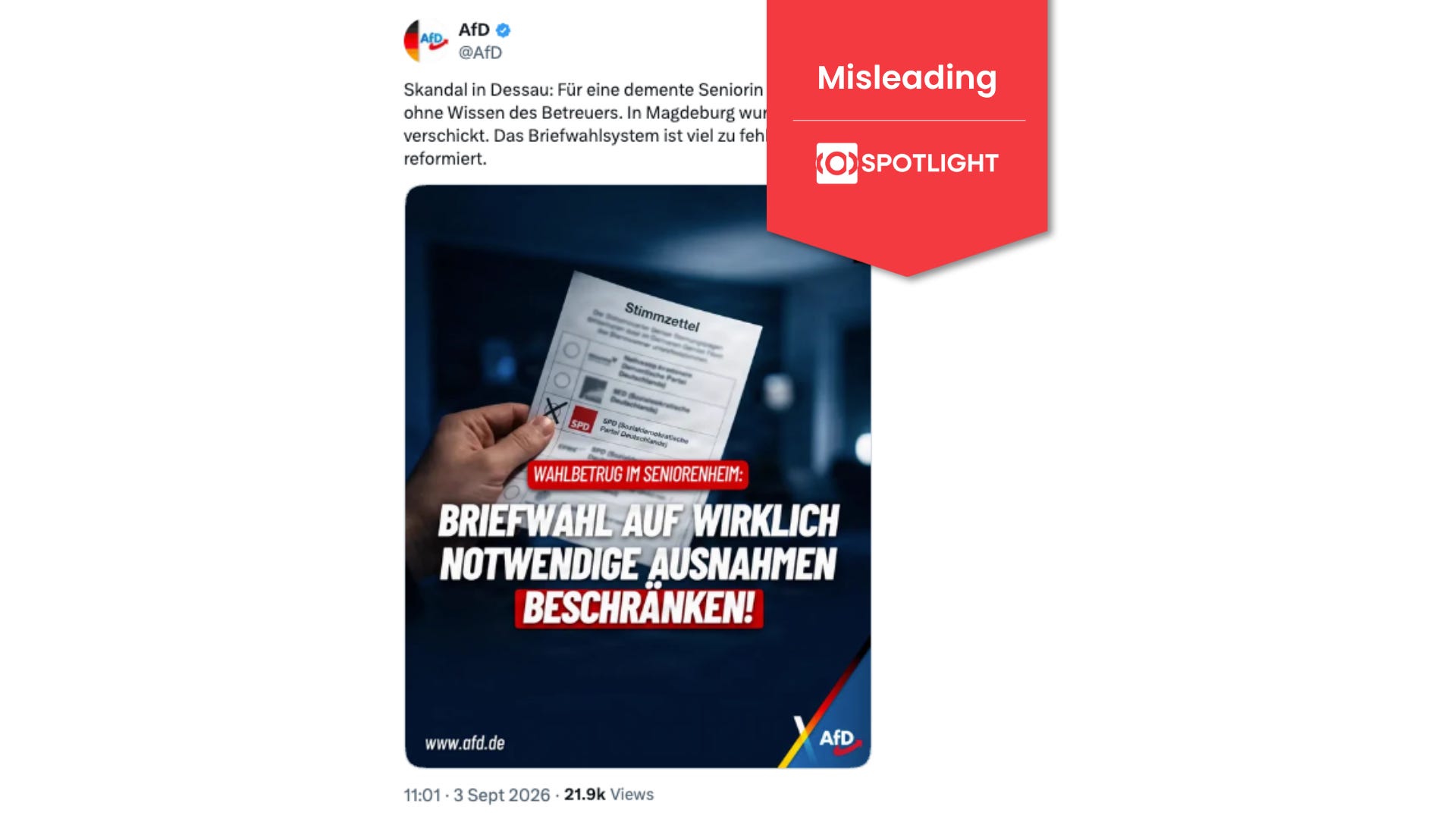
Other aspects of the elections were also targeted by misinformation. Before a single vote was cast, rumours began circulating on social media with claims that postal voting was not secure. If it sounds familiar, it’s because similar themes have come up in other jurisdictions in recent years, most notably in the Trump camp during the 2020 U.S. presidential election.
Mail-in voting has become more common in German elections, leading to a new wave of suspicion. For DW, Monir Ghaedi examined a series of claims, including one that referred to two real incidents but made the misleading, sweeping allegation that individual errors or violations are indicative of systematic fraud.
Another claim said that postal votes are easily manipulated during counting, when in fact, Germany has detailed procedures and rules around the handling and counting of postal ballots.
Russian fake news sphere
In August, Joscha Weber of Deutsche Welle reported in depth on how the September German elections, both the Saxony-Anhalt vote and more coming later this month, were being targeted by the Russian fake news system.
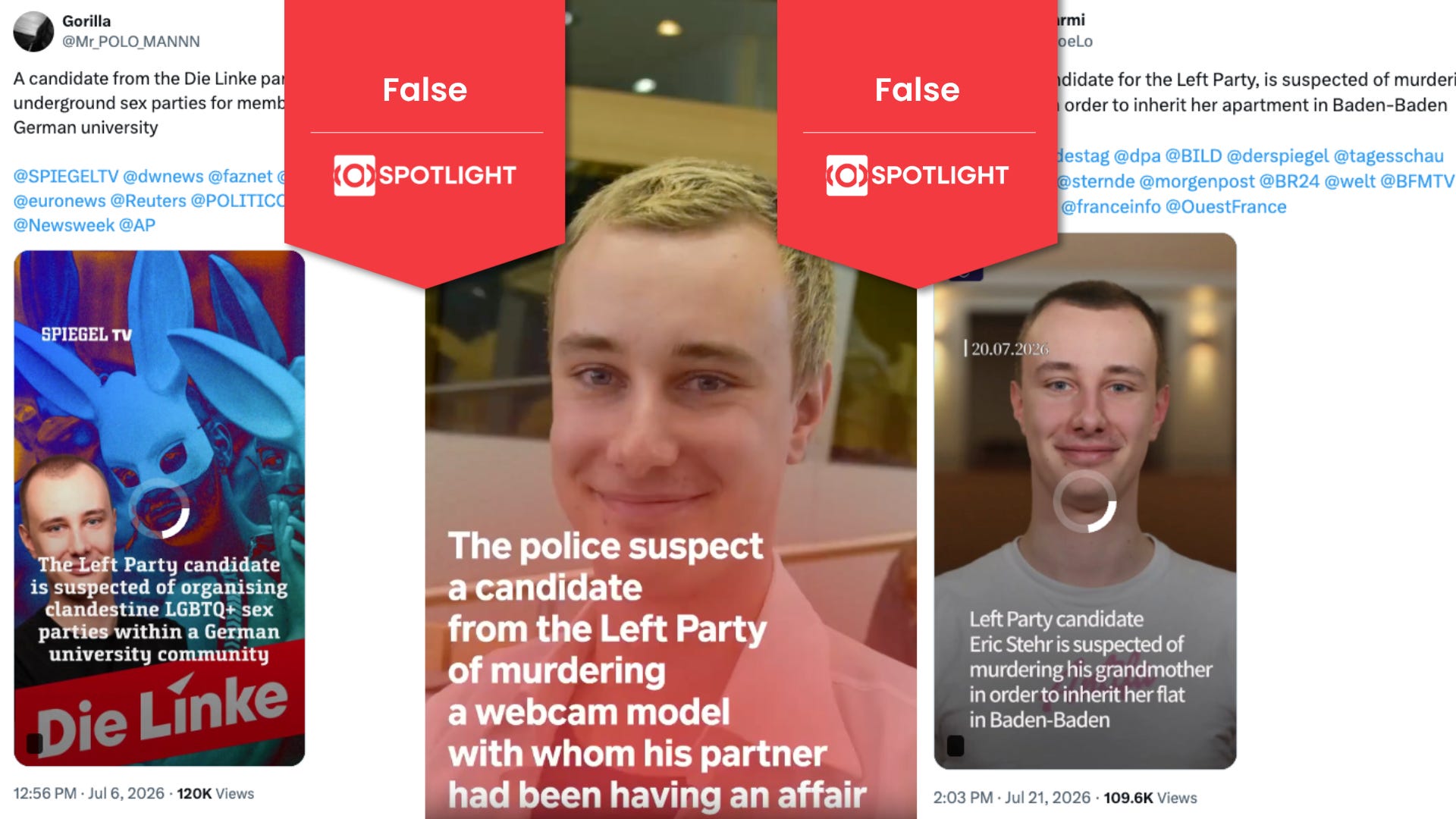
Fake news videos were circulating about candidates in the elections, like Eric Stehr, who was running for state parliament in Saxony-Anhalt for the Left Party. He was falsely accused in these videos of various crimes and activities, including murders. The police confirmed there were no investigations against the candidate, and Stehr said: “I don't want things like that on the internet. But on the other hand, I know there's nothing I can do about it.”
There were other serious false allegations. Kai Wegner, the CDU mayor of Berlin, was falsely said to have attempted to murder a tennis player, and Olaf Lies, the SPD minister-president of Lower Saxony, was falsely linked to a sexual abuse scandal. There was no evidence for any of the claims.
As of early August, DW FactCheck counted more than 180 fake posts linked to the Russian ‘Matryoshka’ influence operation.
While many of the videos seemed generally geared toward destabilising the democratic process, other videos from the same disinformation campaign were aimed at deepening divisions between East and West Germany. One example is a video bearing the Eurostat logo, claiming that the majority of West Germans consider reunification with East Germany a mistake. Eurostat confirmed that it was a fake.
One piece of a larger puzzle
“Even in the run-up to the federal elections, we observed that Russian campaigns generally attempted to discredit candidates from all democratic parties and to support the AfD and BSW parties,” CeMAS’s Julia Smirnova told DW.
“Therefore, what we are now seeing in the run-up to the state elections is a continuation of the long-term Russia strategy of supporting parties that hold more pro-Russian positions and discrediting other parties and candidates.”
For BR24 #Faktenfuchs, Michael Schlegel and Max Gilbert wrote about how these disinformation attempts were likely a piece of the larger puzzle that is Russia’s hybrid warfare strategy in Europe.
Germany’s domestic intelligence agency warned that the aggressive approach of the Matryoshka information manipulation campaign shows that “disinformation and information manipulation are central instruments of hybrid threats.”
The Federal Office for the Protection of the Constitution warned that “further activities are to be expected that aim to exacerbate divisions, discredit democratic officials, question the electoral process or the election results, and strengthen the positions of the Russian leadership.”
As elections approach in other parts of Europe, authorities are already looking out for ‘Matryoshka’ disinformation circulating in domestic social media environments. Public service media members of the Eurovision News Spotlight network are also keeping a close eye on this ongoing issue.