


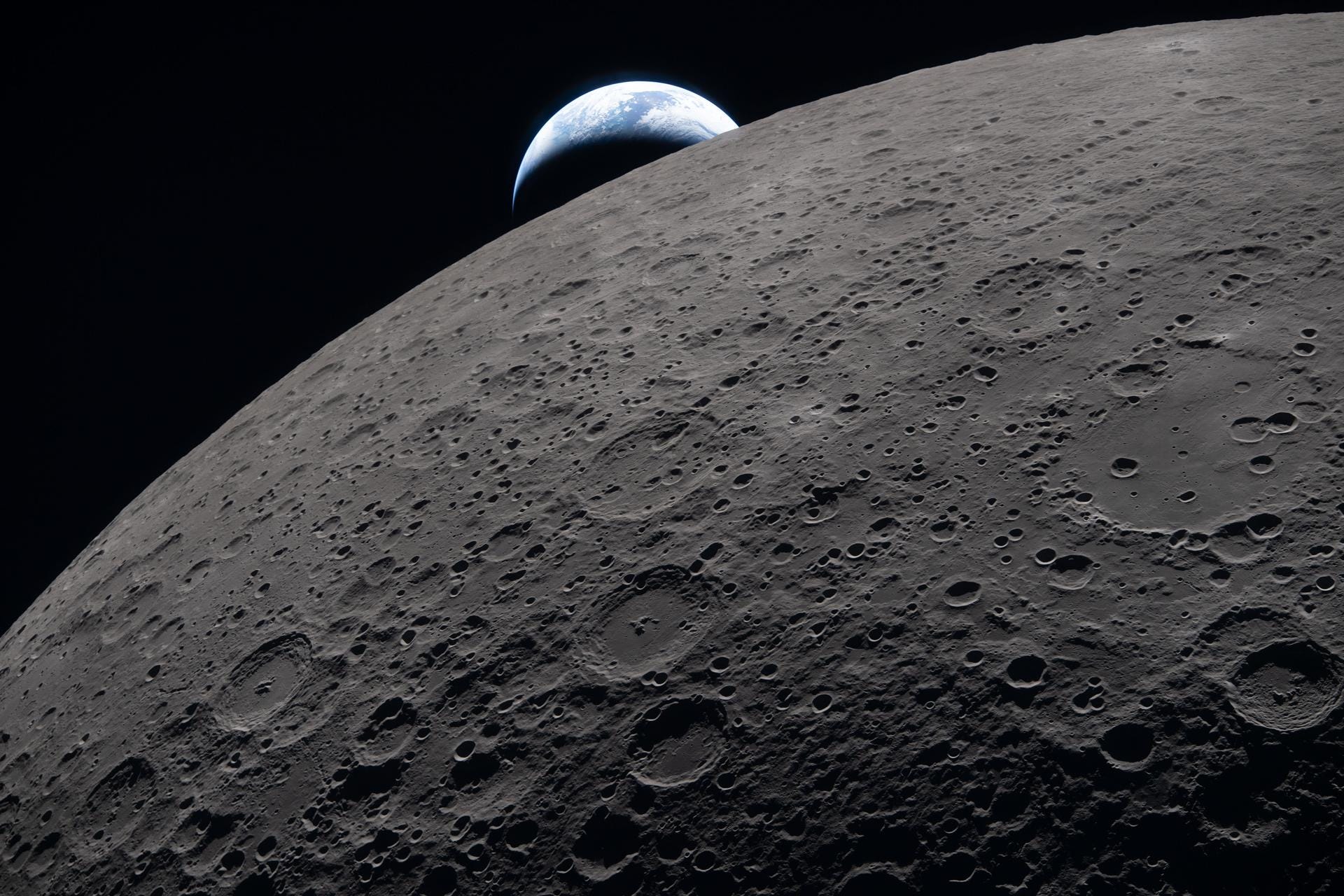
The world watched in awe on Monday, March 6, as four Artemis II astronauts on board NASA’s Orion capsule — named Integrity — flew further than any humans have ever gone before, travelling around the dark side of the moon before beginning their return back to earth.
It was NASA’s first lunar flyby in more than 50 years, and despite no moon landing, it marked yet another ‘giant leap’ for space travel and humanity’s understanding of the lunar surface.
The extraordinary story sparked a huge public appetite for videos showing every aspect of the mission, from breathtaking imagery of outer space to details about quotidian life aboard a space capsule — like how to use the toilet.
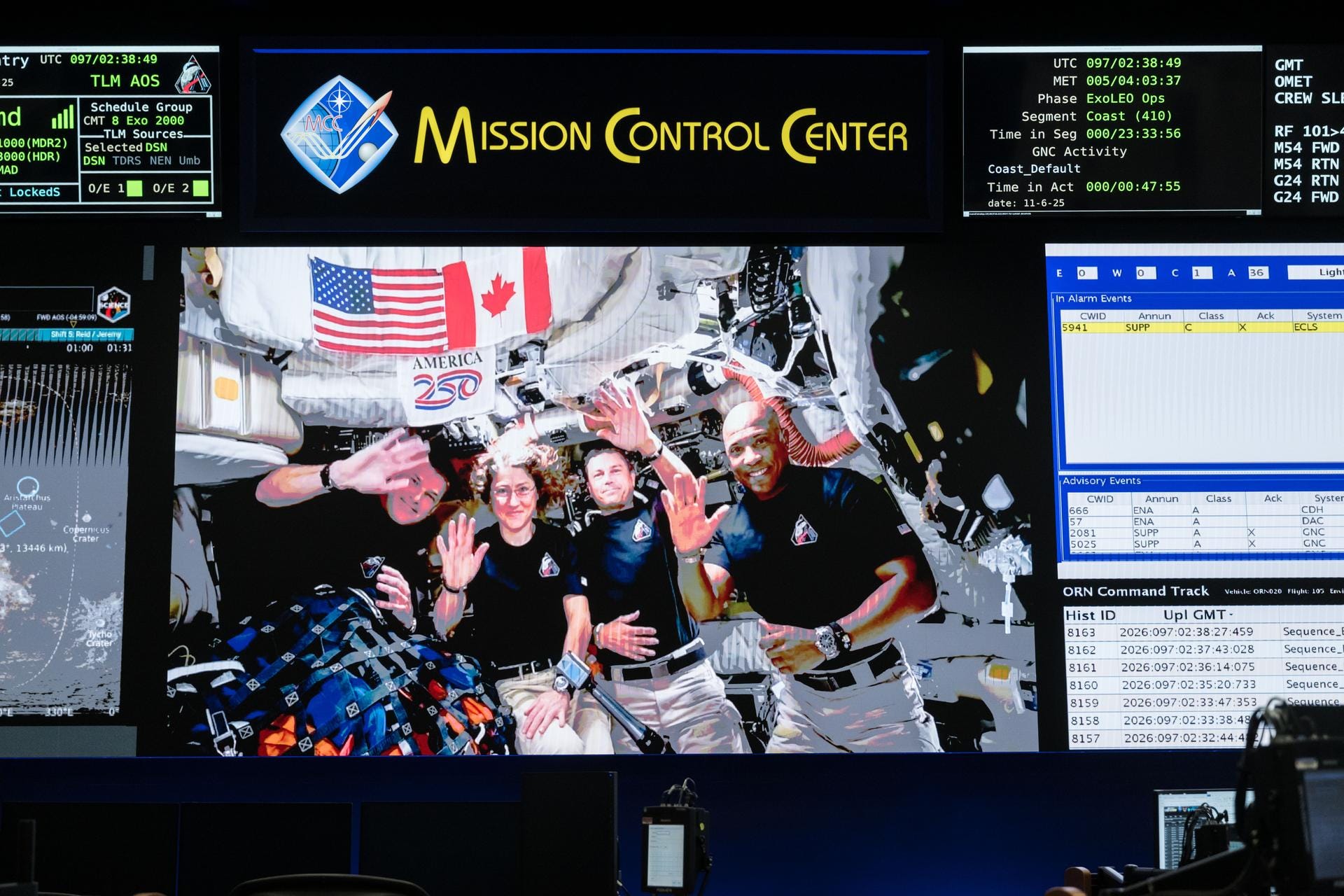
While NASA and the onboard crew have shared lots of content about the expedition, the nature of the travel and breaks in connectivity has meant that there were times during the mission where little new visual material was available, creating the perfect breeding ground for false material to pop up.
On top of that, the moon has remained a staple in the world of modern conspiracy theories. Ever since the first moon landing, false claims have abounded that it was all a sham filmed inside a soundstage.
AI slop adds to widespread misinformation
The term ‘AI slop’ was coined in recent years to describe the high volumes of low-effort synthetic content, created to capitalise on the attention economy. As with all news stories in 2026, there was plenty of slop in circulation during the Artemis II mission.
One video made claims of proving that the mission was entirely staged. It showed the astronauts floating on wires and sitting inside a capsule in front of a green screen. One of the posts (archived) that included this video, which racked up more than a million views, was captioned: “Stop believing these tricksters.”
The footage was created using Google’s AI tools, the company’s SynthID watermark check tool confirmed.

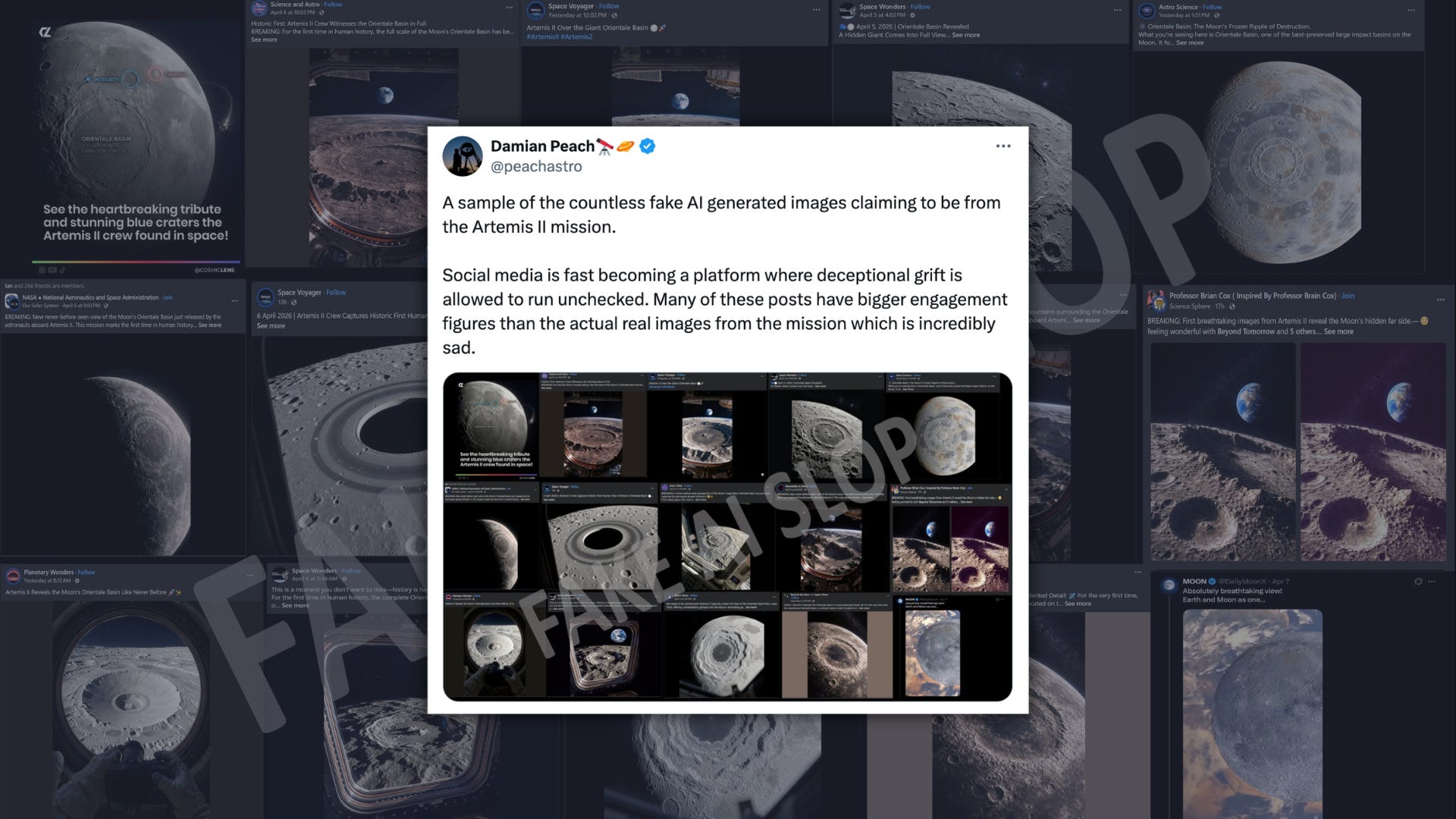
Away from the conspiracy theory world, artificially-generated materials have also been affecting the photography world. Astrophotographer Damian Peach, posting on X, wrote that he had encountered “countless fake” images claiming to be from the Artemis II mission.
He wrote: “Social media is fast becoming a platform where deceptional grift is allowed to run unchecked. Many of these posts have bigger engagement figures than the actual real images from the mission which is incredibly sad.”
Former British MP shares conspiracy theory content
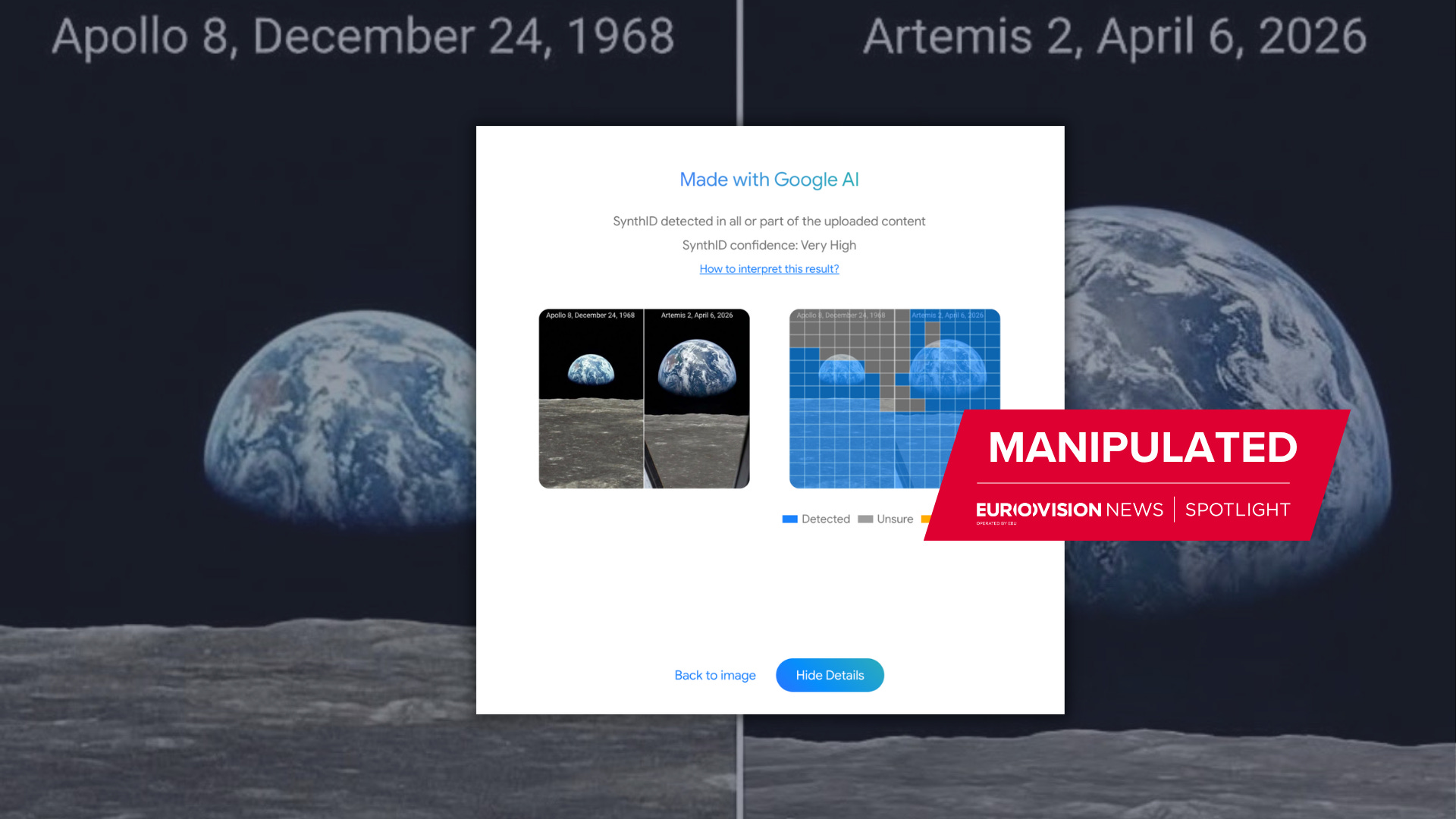
Former British MP Andrew Bridgen shared with his 361,000 followers a pair of side-by-side images (archived) claiming to be from the Apollo 8 mission in 1968 and the Artemis II mission in 2026. The images are almost indistinguishable.
In the caption, he wrote: “It’s a remarkable coincidence that the Earth was exactly the same orientation to the moon with exactly the same cloud coverage when these two pictures were taken 68 years apart. Am I now a coincidence theorist ?”
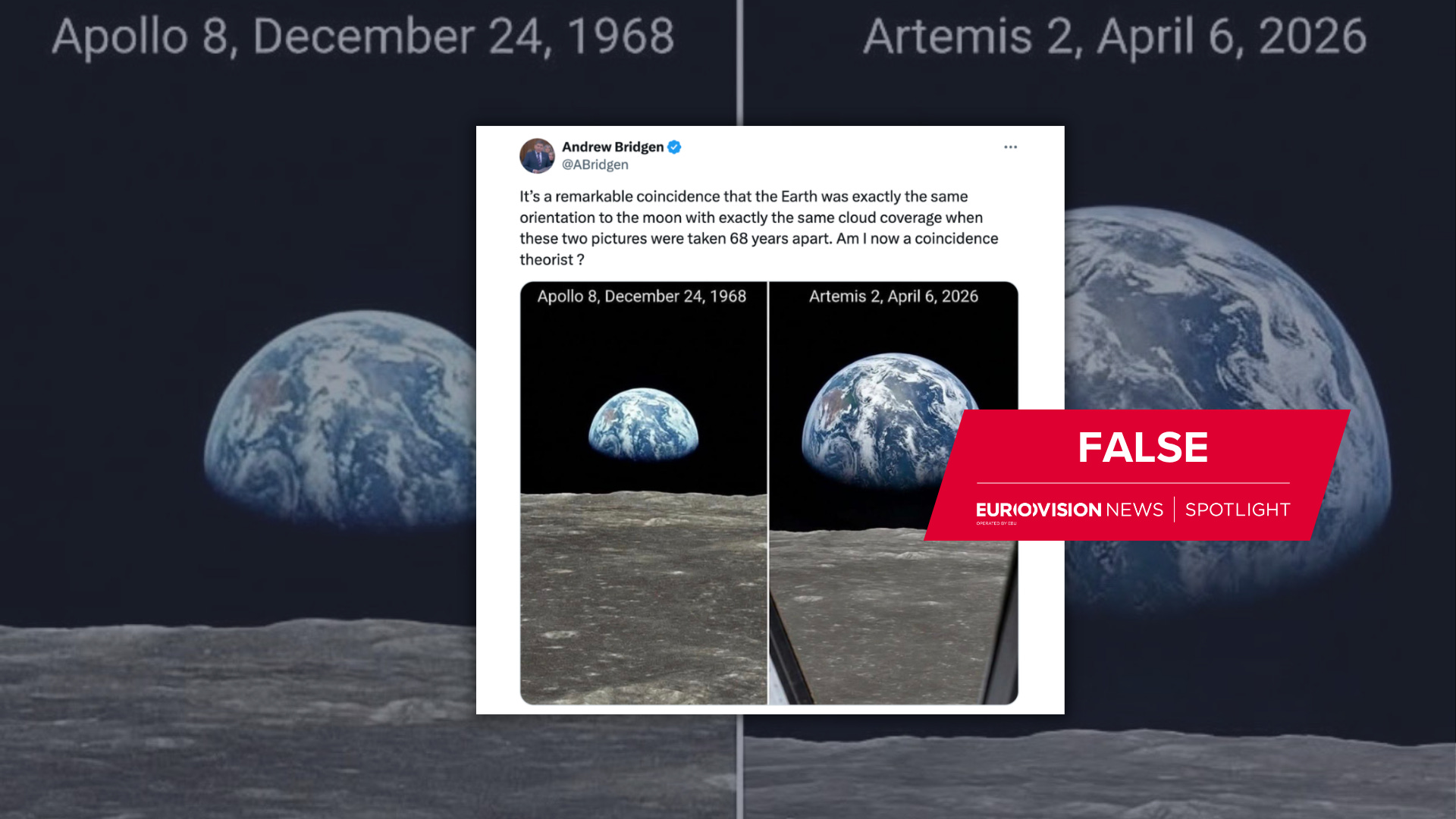
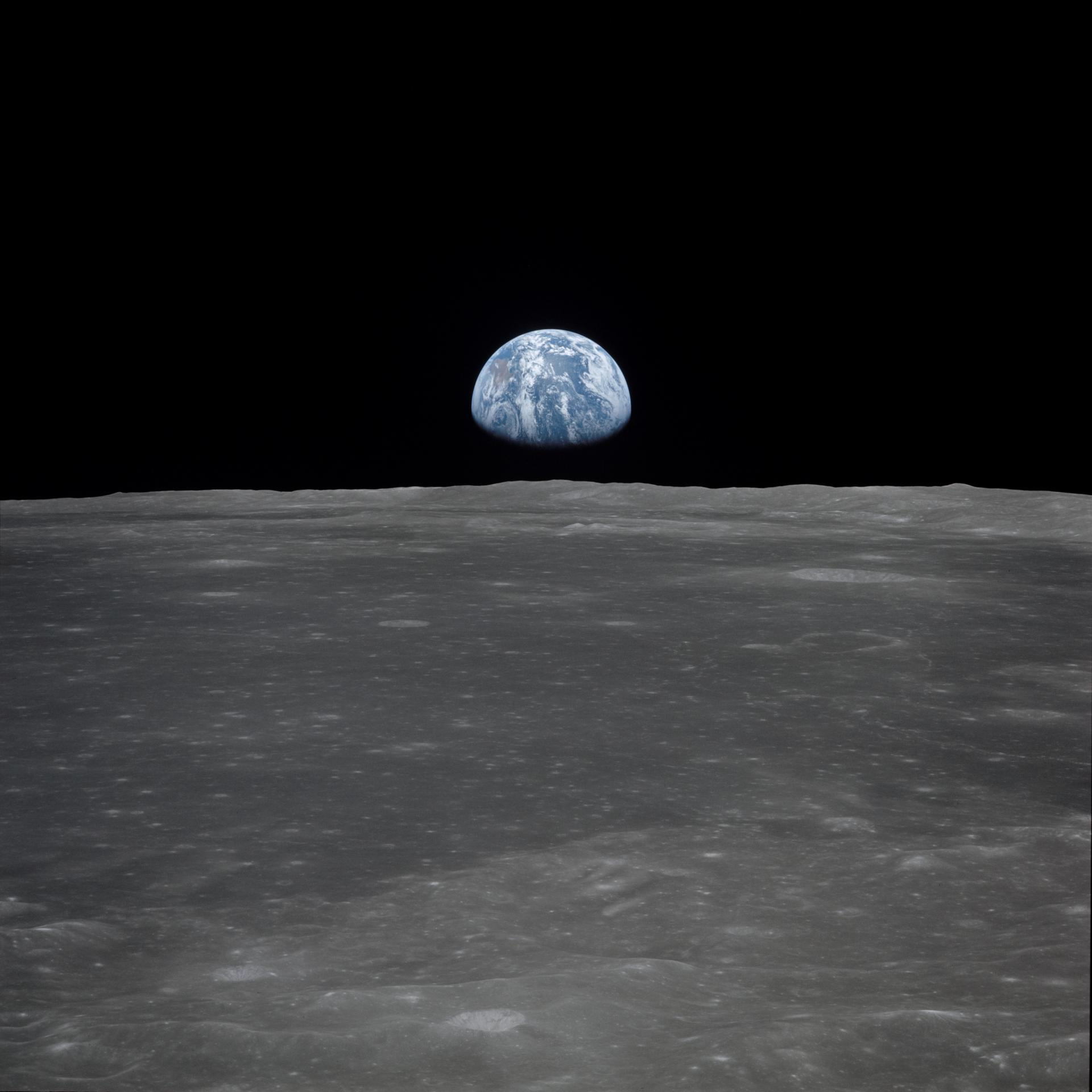
There are a number of issues with the claims. Firstly, the image on the left is not from the Apollo 8 mission, but an edited version based on an original photo from the Apollo 11 mission in 1969 — the first human landing on the moon. Visual analysis of the cloud pattern and visible landmasses on the Earth show that it is a match. The real version is available on NASA’s website.
The image on the right of the collage is clearly the same image as that on the left, but zoomed in and edited to include an apparent window frame around the edges. While the collage seems to be based on the real NASA photograph from 1969, Google’s SynthID can detect an AI watermark across most of the image, further explaining any differences between the two versions and the original.
None of these images match any of those captured during the recent Artemis II mission.
AI spliced video draws on real pictures
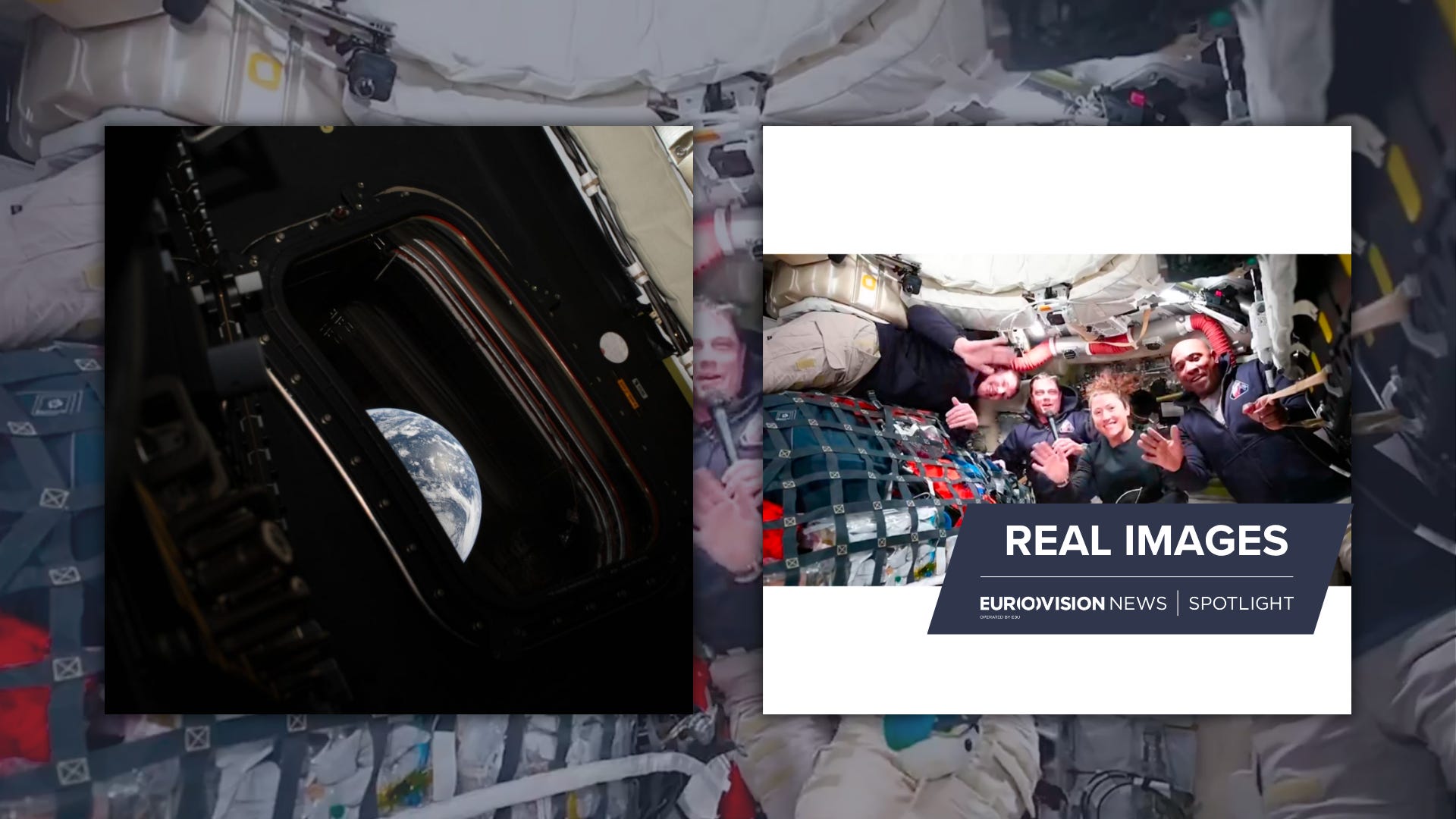
A viral video showed the four crew members of the Artemis II mission cheering and waving at the camera, before it pans to the window, where the Earth was visible in the distance.
A post on X featuring the video that racked up over a million views posed the question: “If there were 4 astronauts on the Artemis II mission, who was filming? Did the camera make that movement, ending in a close-up on Earth, because of zero gravity?”
The X user raises a valid question, despite the fact that the footage is very sophisticated and nothing immediately appears amiss.
The truth reveals a far more sophisticated approach to AI-manipulated content than the types of entirely AI-generated videos we have often analysed in the past.
OSINT analyst Tal Hagin, who frequently posts analysis of online content to his social media account, shared his assessment that the video is an AI-spliced item drawing on two real pieces of content: NASA’s footage of the astronauts waving and a still image of the Earth seen outside the window of the space shuttle.
AI splicing is where artificial intelligence is used to arrange and join different videos together into one sequence. In this case, the first section draws from a real video, while the second scene showing the Earth outside originally came from a still image. The evidence suggests that the middle section — the pan between the astronauts and the window — was entirely AI-generated and created to join the two shots together.
Read Tal Hagin’s full X thread analysis here.
Moon hoaxes circulating since 1969
Despite all the advances the world has made in space travel over the last century, there are still many who don’t believe that humans really landed on the moon in 1969.
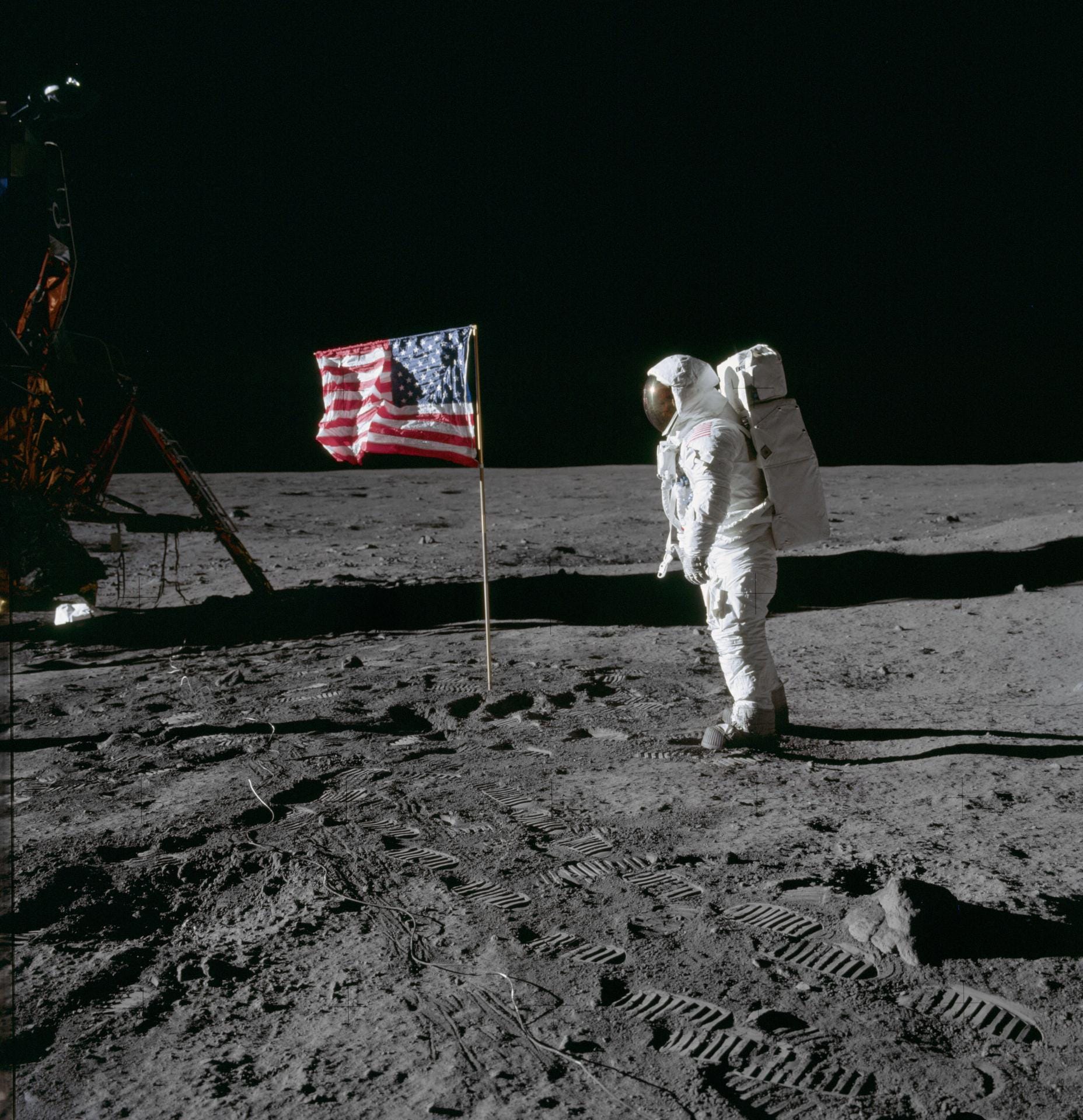
On July 20 of that year, NASA astronaut Neil Armstrong became the first human to set foot on the lunar surface during the Apollo 11 mission. The misinformation surrounding that mission, as well as discourse around the assassination of JFK earlier the same decade, formed the roots of the modern American conspiracy culture that still endures today.
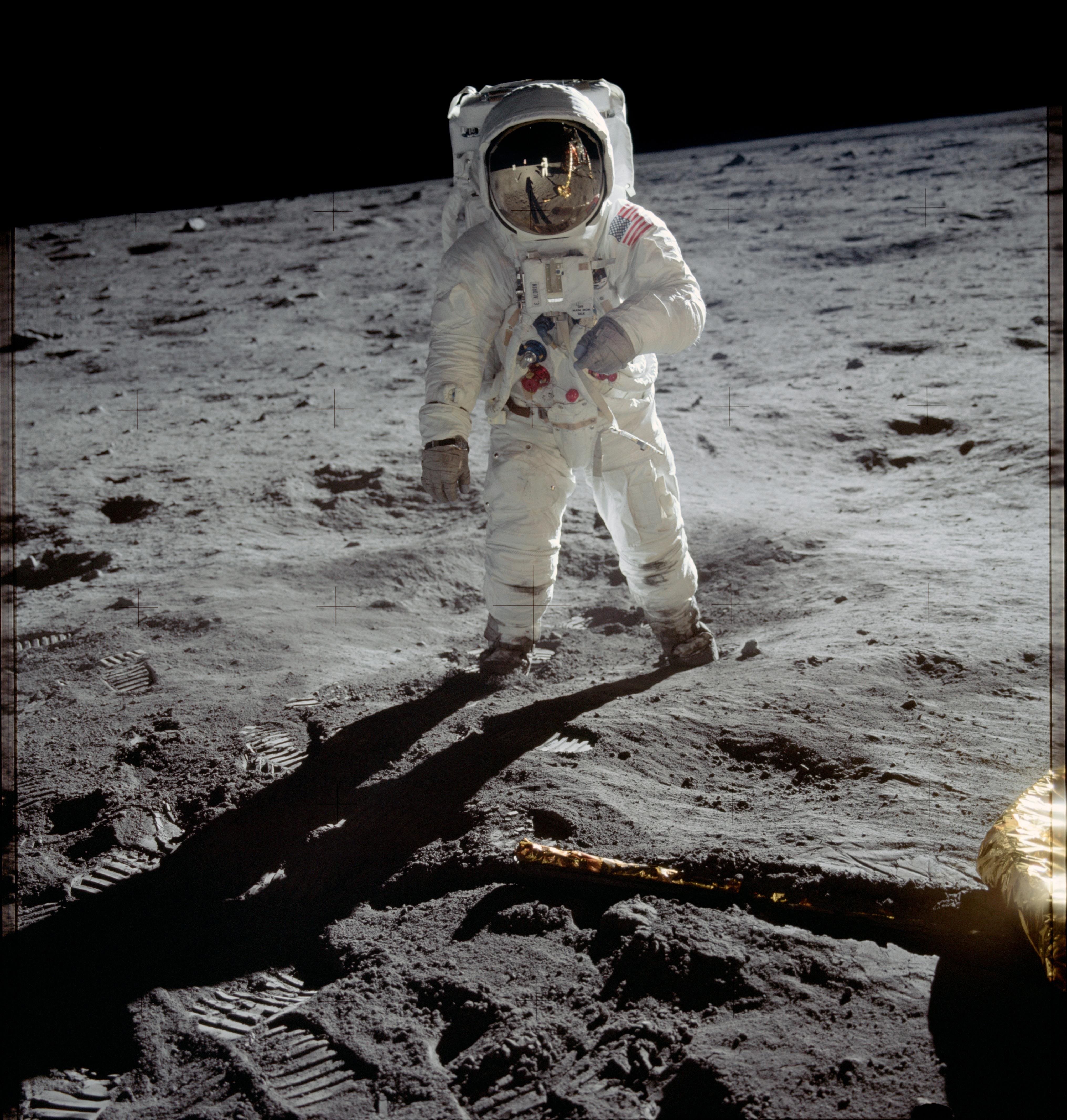
There are several details of the original moon landing that have continued to come under scrutiny by conspiracy-minded sceptics. Why was the U.S. flag planted on the moon waving despite no wind nor air? How were the astronauts able to leave footprints on the lunar surface when it is so dry? Why are there no stars in the images the 1969 crew brought back to Earth? And are the shadows of the astronauts inconsistent in the images of them on the moon?
These suspicions and more have been debunked hundreds of times since the conspiracy theories were formed. Still, they recirculate every time there is a new space mission, especially one involving the moon. For instance, the questions about the lack of stars emerged once again this week.
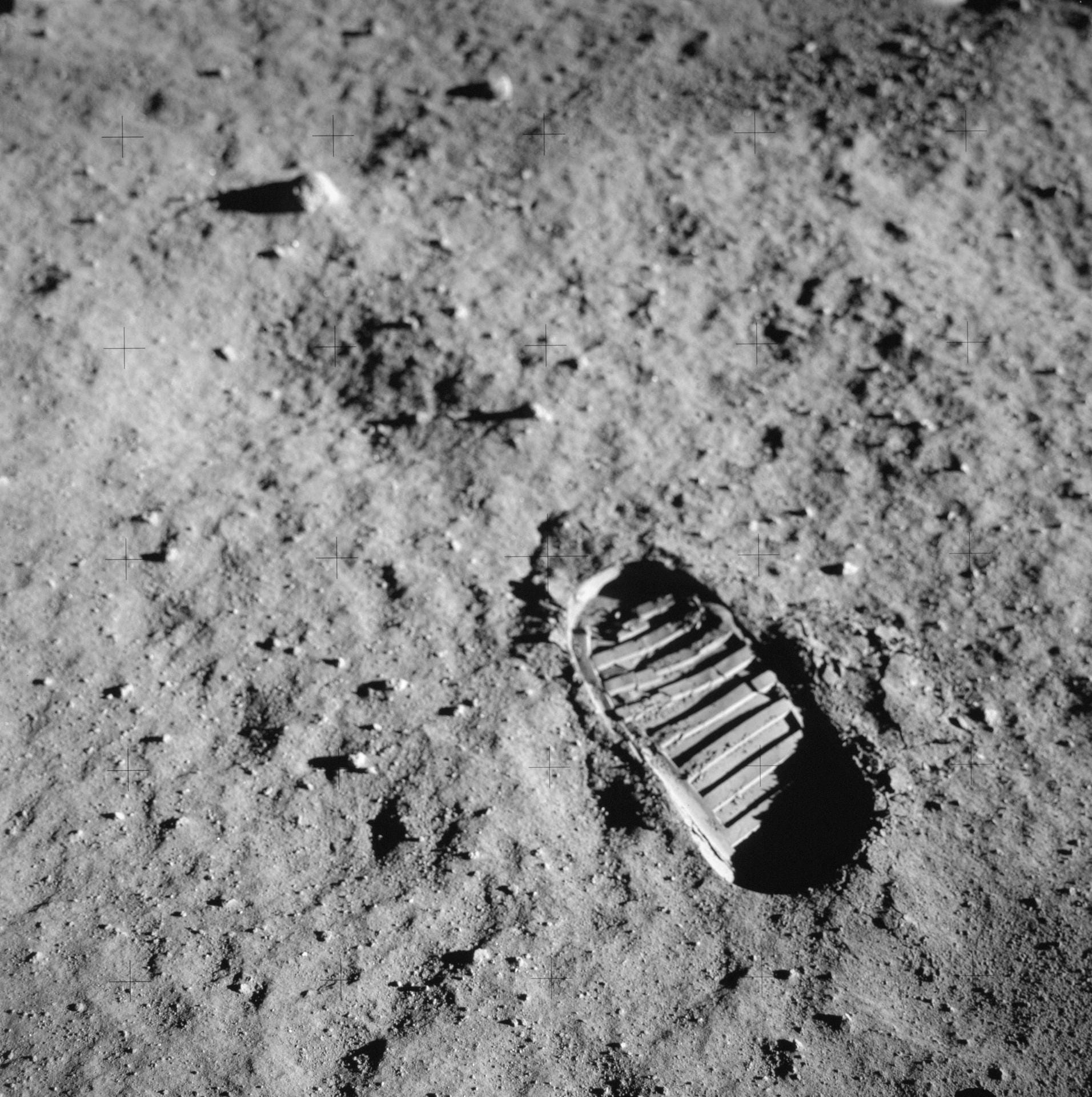
Many of the theories stem from a lack of understanding about the atmosphere and minerals on the moon. The more limited capabilities of cameras — as well as how varied light sources affect their function — offer more explanations about some of the most commonly asked questions.
The swift improvement in AI technology is a gift for moon misinformation on two fronts: it’s ideal for those who wish to make and spread fakes, while conspiracy theorists can sow the seed of doubt with claims that any agency or official person could themselves be using AI.
Whatever the cause of the scepticism surrounding visits to the moon, it’s clear that nearly 60 years on from the first lunar landing, the desire to question or challenge this greatest of human feats is alive and well.
Read more member stories about the Artemis II mission:
RTVE: Man's arrival on the Moon in 1969: hoaxes and falsehoods that have circulated ever since
RTVE: Artificial intelligence and disinformation about the Artemis II mission: it's real, not a recreation
3CAT: We reached the Moon: from denialism to evidence of the most unusual journey
3CAT: A chroma key or images made with AI: false rumours spread about the Artemis mission
SOURCES
Bbc.com. (2026). Watch: How will the Artemis astronauts go to the toilet in space? [online] [Accessed 7 Apr. 2026].
Flannery, M. (2024). Series of images showing ‘faked’ moon landing were AI-generated. [online] Spotlight.ebu.ch. [Accessed 7 Apr. 2026].
X (formerly Twitter). (2026). Available at: If there were 4 astronauts on the Artemis II mission, who was filming? [Accessed 8 Apr. 2026].
X (formerly Twitter). NASA (2026). Available at: "We can see the Moon out of the docking hatch right now. It's a beautiful sight." [Accessed 8 Apr. 2026].
NASA. (2026). Artemis II Looking Back at Earth - NASA. [online] [Accessed 8 Apr. 2026].
Portero, M., Navarro Sorolla, M. (2026). Llegada del hombre a la Luna en 1969: bulos y falsedades que circulan desde entonces. RTVE.es. [online] [Accessed 8 Apr. 2026].
X (formerly Twitter). (2026). Available at: A sample of the countless fake AI generated images claiming to be from the Artemis II mission. [Accessed 9 Apr. 2026].
X (formerly Twitter). (2026). Available at: “All this Fake NASA 💩 with AI and CGI and green screens. Stop believing these tricksters” Accessed 9 Apr. 2026].
X (formerly Twitter). (2026). Available at: “Not one star. 60 years of technological progress with cameras… And not one star. I’ve heard all the explanations for this. None make any sense.” [Accessed 9 Apr. 2026].
X (formerly Twitter). (2026). Available at: It’s a remarkable coincidence that the Earth was exactly the same orientation to the moon with exactly the same cloud coverage when these two pictures were taken 68 years apart. Am I now a coincidence theorist ? [Accessed 9 Apr. 2026].
NASA. (2023). Apollo 11 Mission image - View of moon limb,with Earth on the horizon,Mare Smythii Region - NASA. [online] Available at: [Accessed 9 Apr. 2026].