


Your weekly briefing on digital investigation, OSINT, and the information war.
⚡ The 30-second brief
The debunk: Sync-verification of eyewitness footage in Minneapolis refuted “domestic terror” claims, proving Alex Pretti was holding a phone, not a weapon, when shot.
New tech: Emerging research into “collaborative malicious AI agents” reveals how automated swarms now coordinate to fabricate social consensus in real-time.
OSINT stack: Bypassing Telegram’s search friction using Google Dorks (
site:t.me) to extract cached messages and hidden forensic leads.
🔦 In the Spotlight
Fact-check: Spotlight members were swiftly working to verify different angles of the shooting of Alex Pretti on a Minneapolis street in broad daylight on Saturday. Read a full breakdown by Spain’s RTVE and watch a TV segment by BBC Verify. And while much of the circulating material was real, there were also AI-retouched images being shared. Read more by SRF and 3CatInfo, or listen to this ORF report (German).
Monitoring: The internet blackout in Iran was still hampering Iranians’ efforts to get videos online, and many of what did emerge showed the scenes in early January when the government began a brutal crackdown. Spotlight members have been looking for new material to help us understand what is happening inside the country, where rights group HRANA is reporting that it has confirmed over 6,000 deaths. They are still investigating a potential 17,000 more deaths.
🖋️ The Lead: Video verification at heart of U.S. ‘inflection point’
The shooting dead of an American citizen by federal agents in Minneapolis at the weekend further stoked anger in the city and sparked outrage across the U.S. Alex Pretti, a 37-year-old nurse, was killed during a confrontation between immigration agents and civilians.
Secretary of Homeland Security, Kristi Noem, accused Pretti of “domestic terrorism”. Other discourse, including from Noem, centred around claims that Pretti brandished a weapon and was about to attack officers. It quickly emerged that Pretti was a legal gun-owner in a state where carrying such weapons is allowed.
Crucially, the video evidence did not back up the ‘domestic terror’ claims. Spotlight members verified multiple clips from the scene, showing Alex Pretti filming with his phone in his hand. After being tackled to the ground, an officer appears to pull Pretti’s gun from his waistband, removing the civilian’s gun from the altercation. Then, Pretti is shot in the back; ten shots ring out in a five-second video.
The result was what Governor Tim Walz called an “inflection point” for America. Now, the U.S. administration has indicated that it may change course in Minnesota, less than three weeks after the killing of Renee Good, a case in which swift video verification also played a key role.
— Maria
⚙️ The intelligence stack
🔍 Advanced search operators for Telegram
Telegram’s native search is notoriously limited, often hiding critical eyewitness media or niche channels from direct view.
💡 Quick tip: When investigating breaking news or monitoring extremist groups, don’t rely on the app’s internal search. Instead, use a targeted dork on a search engine to surface messages, files, and channel invites that haven’t been indexed elsewhere.
The Syntax: site:t.me "keyword" - "view in telegram"
Why it works: By excluding the phrase “view in telegram,” you filter out the standard channel landing pages and force the search engine to index the actual message content and preview text.
The OSINT Edge: This approach often reveals “private” channel links or deleted message previews that are still cached in search engine results.
📍Forensic smartphone verification: Master the "zoom-in" lens to reconstruct high-stakes use-of-force events (Nieman Lab)
📍Automated fact-checking: Implementing Google APIs and ClaimReview schema to accelerate OSINT workflows (via Eurovision News Spotlight)
📍Countering AI bot swarms: Forensic strategies for detecting "collaborative malicious AI agents" designed to mimic human consensus (The Guardian)
📍Cross-platform identity stitching: Linking accounts via photo reuse and username structures (ShadowDragon)
📍Climate misinformation forensics: Technical requirements of the new EU Declaration on deceptive climate change narratives (European Commission)
📡 Signal analysis
OSINT Industries has published a new case study detailing how investigators used OSINT and social media footprinting to intercept a tiger cub trafficked for illegal sale.
This investigation provides a rare, technical look at how digital forensics can be applied to wildlife crime, using real-time intelligence to trace supply chains and unmask the coordinators of high-value animal trafficking networks. (via OSINT Industries)
Before we go…
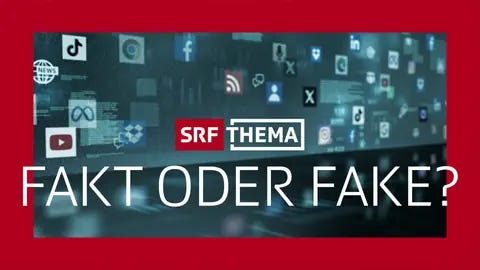
Schweizer Radio und Fernsehen (SRF) is hosting a dedicated “Fact or Fake?” theme week from January 26 to 30, 2026, with reports, investigations, and fact checks on current issues in politics, business, and society.
The broadcaster is inviting the public to submit suspicious media via WhatsApp or web forms for expert verification and investigative reporting.