


The heat wave that has been scorching Europe for weeks created the perfect environment for climate disinformation actors to spread false and misleading claims on the matter.
The extreme temperatures are causing widespread wildfires and appear to be connected to a rising death toll across Europe. According to the World Health Organization chief Tedros Adhanom Ghebreyesus more than 1,300 excess deaths had been recorded between 21 and 28 June “linked to high temperatures in Europe”.
Videos shared out of context, resurfacing old narratives, and misinterpreted laws are only a few of the tools used to spread false claims around heat waves, reinforcing the trend that sees a new surge of climate disinformation following extreme weather events and natural disasters.
High temperatures are not melting traffic lights (yet)
A video went viral on social media claiming to show a deformed traffic light in Verona, Italy, melting during a heat wave. The caption read, “In Verona it’s so hot that traffic lights melt.”

Starting on June 24, the video was shared on multiple platforms, garnering hundreds of thousands of views. The video was initially shared (archived here) by Italian social media users, but it quickly spread in other languages, including in Albanian (archived here), Turkish (archived here), and German (archived here). Some of the social media users claimed (archived here) the video was shot during the heat wave in Germany.
The video was shared out of context and conveys a false claim, as reported by several fact-checkers. The clip was shot in Lugagnano, Veneto, as said by Jhonny Puttini, the original poster (archived here), and as confirmed by the Google Street View frame below.
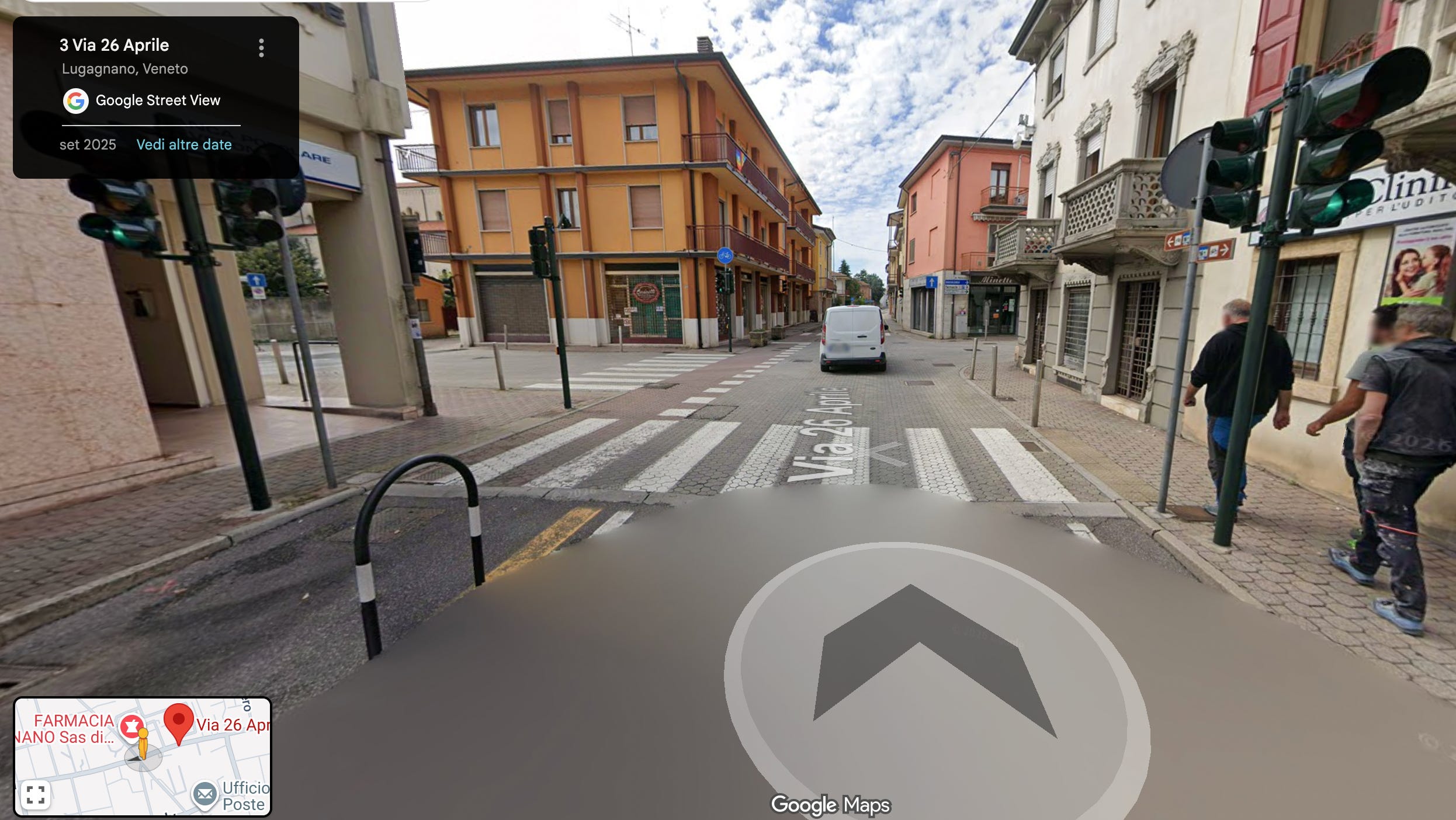
However, while it is true that the traffic light featured in the video recently melted, local news outlets revealed that the cause was not the heat wave, but a car fire that broke out in the evening of June 23, in Via 26 Aprile, in Lugagnano. Pictures of the accident confirm that the fire occurred by the impacted traffic light seen in the viral clip.
A week after the accident Puttini himself published a Facebook update (archived here) explaining that his video was meant to be ironic.
Heat waves are not artificially generated by HAARP
As it often happens after severe climate events, several social media posts have been pointing at the High-frequency Active Auroral Research Program (HAARP) and at other technologies, as responsible for the heat waves that have been hitting Europe over the last two months.
For example, on July 12 an X user wrote (archived here), “Shutting down all the data centres will end the heat islands that push out rain clouds and widen heatwave area. Ending HAARP and cloud seeding that drains water from air and widens heat islands will end heatwave weather.”

As extensive debunking by multiple news outlets has demonstrated, HAARP cannot manipulate the weather and there is no evidence or known technology through which it could artificially induce extreme weather events such as heat waves.
The U.S. Air Force founded the HAARP research station in the 1990s, but since 2015 it has been operated by the University of Alaska Fairbanks. The research facility is used to study atmospheric activity with high-frequency transmitters and for years it has been at the centre of several conspiracy theories claiming that HAARP can manipulate the weather and cause natural disasters through its radio transmissions.
On its website HAARP explains that “the radio waves in the frequency ranges that HAARP transmits are not absorbed in either the troposphere or the stratosphere—the two levels of the atmosphere that produce Earth’s weather. Since there is no interaction, there is no way to control the weather.”
According to climate scientists, the recent heat waves across Europe were caused by a persistent high-pressure system that trapped a vast quantity of hot air over the continent. Scientists also say that human-induced climate change and burning fossil fuels are making heat waves more frequent and intense.
Spain has not banned air conditioning
An X post from June 25 (archived here) claimed that in Spain “Public spaces and commercial buildings cannot set their AC systems lower than 27°C (80°F).” The same claim was shared (archived here) by other social media users.
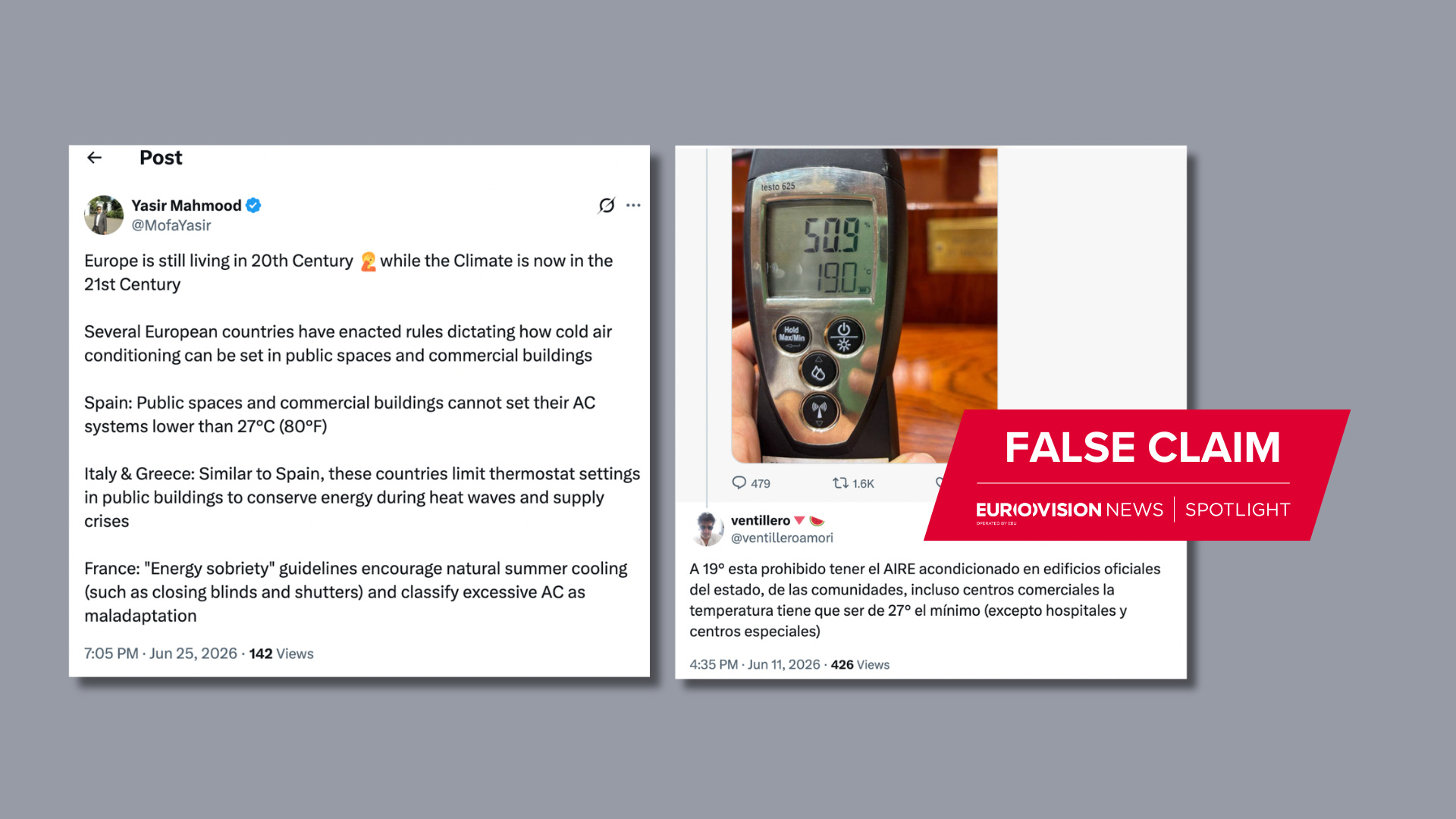
A debunk by DW revealed that the claim originated from a Time Out headline written on August 3, 2022, when the Spanish government temporarily banned people from setting their AC below 27°C in response to the energy crisis caused by Russia’s invasion of Ukraine in 2022, at a time when other countries also took similar measures.
The Spanish ruling stated that the cooling “may not be set below 27 degrees Celsius and the heating may not be set above 19 degrees Celsius.” The ban lasted one year and it was only applied to public buildings and shops, DW reported, making it unrelated to the current heat wave.
IPCC scientists are not resigning over climate science manipulation
Posts went viral on social media claiming that 46 scientists resigned from the Intergovernmental Panel on Climate Change (IPCC) in protest against the manipulation advanced by climate science. The same claim circulated in English (archived here), French (archived here), and Dutch (archived here).
“46 IPCC scientists have resigned. The reason? Because they are not being listened to, because their opinions differ from the prevailing narrative!” wrote (archived here) a Facebook user on June 28. The post went on listing statements from alleged IPCC scientists suggesting that the IPCC’s climate models deviated from reality.
A fact-checking article by AFP reported that similar claims and quotes purporting to support this narrative have been circulating at least since 2013. Additionally, some of the researchers mentioned in the posts have already passed away.
AFP also found that some of the researchers mentioned by social media users are not IPCC scientists, but expert reviewers in charge of commenting IPCC drafts.