


In the Strait of Hormuz, the U.S. Navy was operating a blockade against vessels entering or leaving Iranian ports. In Washington D.C., U.S. President Donald Trump was saying that talks with Iran could restart in the coming days.
As the war between the Iran and the U.S. and Israel dragged near the seven-week mark, there were some signs of the sides returning to the negotiating table. But on the internet, another battle was as active as ever.
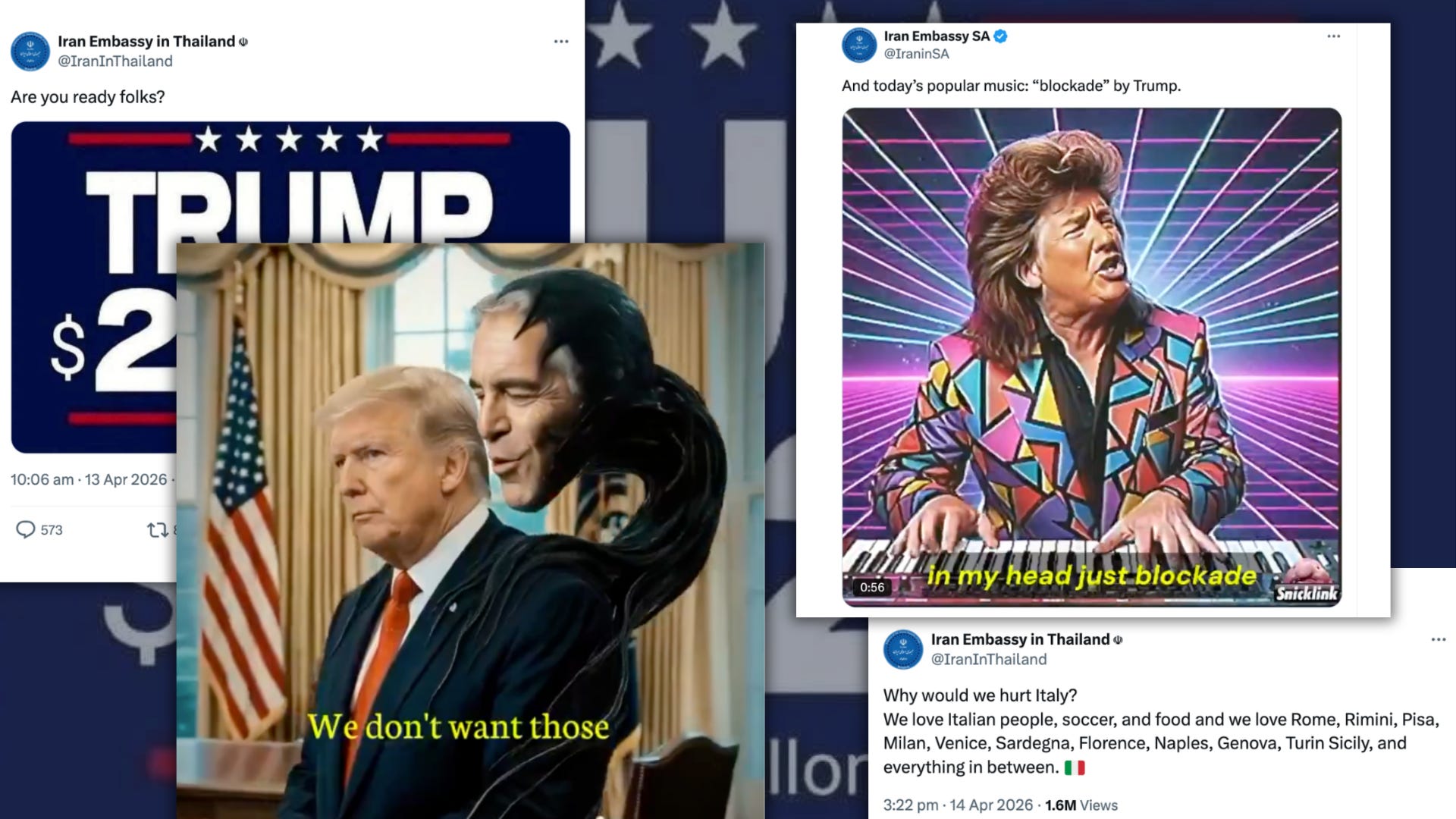
Trump and others in his circle are no strangers to posting highly political and even AI-generated content on social media. Now, Iran is retaliating with AI ‘slopaganda’ — a portmanteau of ‘AI slop’, high-volume content created by generative tools, and propaganda — with Iranian embassies around the world taking their cue from Trump’s style of posting to mock the American leader and reach out a hand to other countries in the West.
The posts offer an insight into the narratives being pushed by Iran in a bid to discredit the U.S. Many of them feature references to disgraced financier Jeffrey Epstein, who died in 2019 but remains at the centre of a series of high-profile sexual abuse allegations. Other recent posts referring to Trump’s depiction of himself as Jesus show the speed at which Iran is able to respond to the domestic talking points in the U.S.
Since the beginning of the war, the AI ‘slop’ being pushed out across Iranian networks has had strong religious overtones, often depicting Trump and Netanyahu taking orders from the devil and the Iranian leaders bathed in celestial light.
Are the accounts real?
The patchy and sometimes non-existent verification system on X nowadays means that any account purporting to be official must be checked and confirmed as authentic.
Many of the accounts posting as Iranian embassies are not verified, or carry a blue verification badge, which can be bought by anyone on X.
However, the Iranian Ministry for Foreign Affairs has a webpage that lists all of the embassies and their corresponding X (formerly Twitter) accounts. The list confirms the authenticity of the accounts analysed here.
The theme of Epstein
Much of the Iranian pro-regime content since the beginning of the war has heavily featured talking points about Donald Trump’s alleged links to Jeffrey Epstein and the broader theme of the Epstein files. The Iranian embassies have been resharing a lot of this content.
On April 16, the Embassy of Iran in Bulgaria shared an AI-generated video depicting Israeli Prime Minister Benjamin Netanyahu holding the Epstein files and urging Trump to dance on command. It appeared to suggest without evidence that Netanyahu was leveraging Epstein-related blackmail to force Trump to fight its war in Iran — a popular motif tying together a range of conspiracy theories across these two major stories.
The footage goes on to show Trump saying “I cannot do this anymore” before he is seen walking through red liquid in a ‘Graveyard of Americans in Iran’. A logo on the footage showed that it was not a direct original, but rather a reshare of a video by self-described ‘AI visual Artist’ Mujtaba Arts. Their account features several other similarly-themed videos.
The Iranian embassy in Tajikistan shared another Epstein-related AI video two days earlier, following a similar horror-blackmail theme. It showed Jeffrey Epstein’s head hovering over Trump’s shoulder and telling him: “Don’t fight it, Donny. We’ve been bonded since the ‘90s.”
It goes on to imagine that Jeffrey Epstein is controlling Trump and ultimately possessing his body, at which point he calls ‘Bibi’ and promises him “everything”. In this story, it is again Benjamin Netanyahu who is depicted — without evidence — as the holder of “tapes” that could ruin Trump.
Google’s AI detector SynthID picked up watermarks throughout this footage, indicating that it was at least partially made using Google’s AI tools.
The video bears a logo for an account called TheForbiddenClothes, which posts AI-generated meme content about geopolitics and current events, and also sells merch featuring the same artwork. Much of their recent posts have focused on the relationship between Trump and Netanyahu, and the account recently also posted that the moon landing was “faked”.
Divisions over Trump’s Jesus image, papal feud
Donald Trump was widely criticised even among his own supporters for a recent post on Truth Social which featured an AI-generated image of himself depicted as Jesus healing someone in a hospital bed.
Defending himself, Trump insisted that he thought it showed him as a doctor. The post was later deleted, although the president shared a new AI image of Jesus embracing him later the same week.
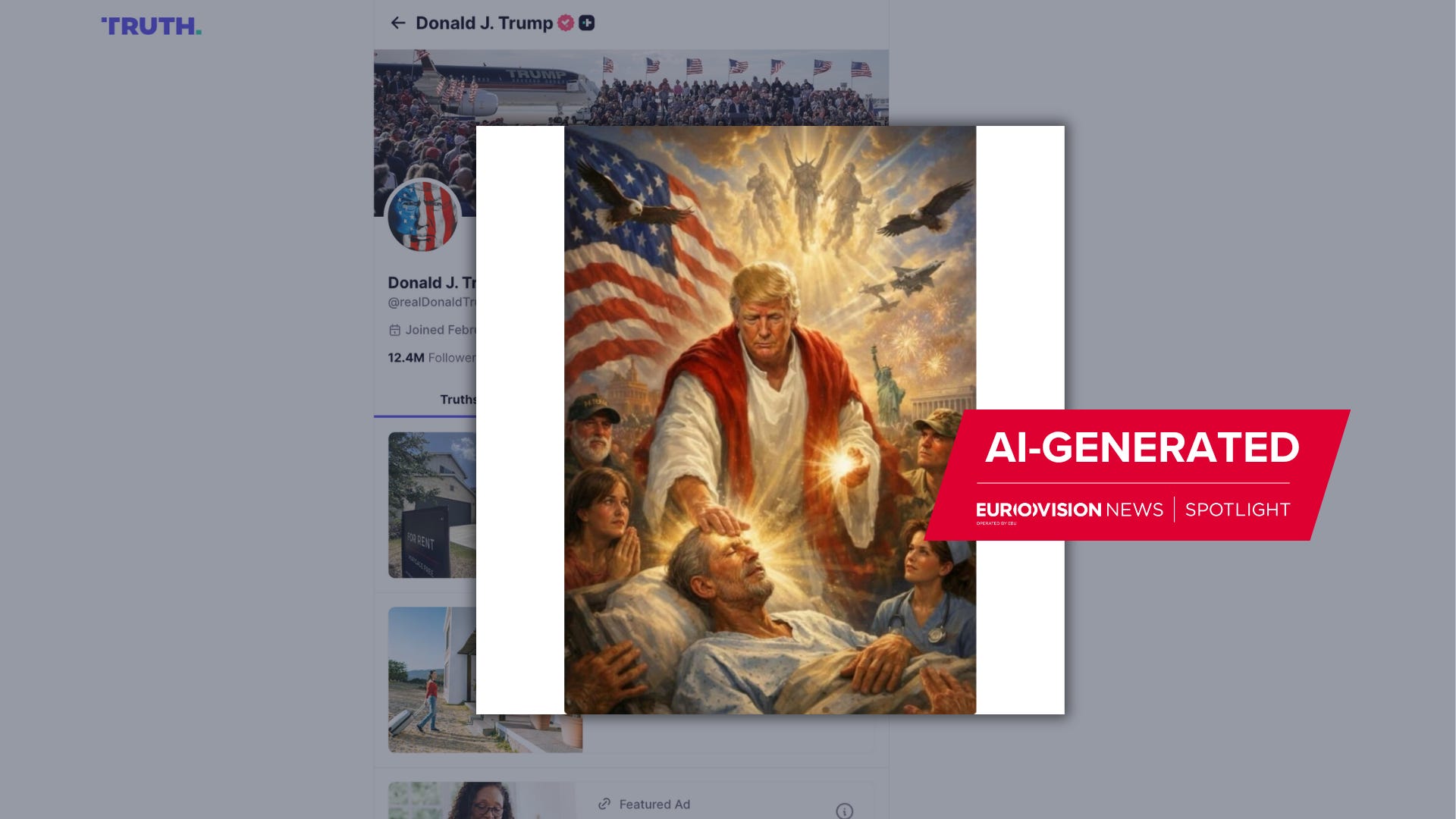
Some Christian followers of Trump were already being pulled in opposite directions; the Jesus posts came as the U.S. president and his administration were engaging in a war of words with Pope Leo XIV, the American-born leader of the Catholic Church who Trump is accusing of being too liberal and “weak on crime”.
The religious flavour to Trump’s latest targets drew backlash at home and in Europe. One of Trump’s closest EU allies, Italian Prime Minister Giorgia Meloni, had already refused to back the U.S.’ war efforts in Iran, and then called the president’s attacks on the pope “unacceptable”. In response, Trump called her “unacceptable”.
As other European leaders broke with Washington over the war on Iran, and amid internal criticism from some quarters of the MAGA movement, it was a moment of particular disunity in the West.
The Iranian regime ecosystem has been quick to respond to these talking points. One video posted by the Iranian embassy in Tajikistan animated the Truth Social Jesus image, showing Jesus flying down behind Trump and striking him violently, sending him bloodied and flying downward into hell. The voiceover said: “Your reckoning has come.” The post racked up an enormous 23.4 million views in just over two days.
The Iranian establishment has also backed the pope amid his tensions with Trump. The parliament speaker Mohammad Bagher Qalibaf wrote in a post on X: “Honoring Pope Leo’s fearless stand!”, adding: “@Pontifex leadership inspires millions – thank you for this light!”
The embassies were no different. On April 17, the embassy in Belarus posted a screenshot from Al Jazeera with the headline: “The pope has shown the world how to stand up to Trump.”
As the rift widened between the U.S. and Italy, and Trump threats that the U.S. would not be there for its European ally if Iran were ever to strike, Iranian regime accounts began posting about their love of the Mediterranean country.
The Iran Embassy in Thailand posted on X: “Why would we hurt Italy? We love Italian people, soccer, and food and we love Rome, Rimini, Pisa, Milan, Venice, Sardegna, Florence, Naples, Genova, Turin Sicily, and everything in between.”
The Thai account was particularly active, tweeting rebukes to the White House’s posts and resharing memes from across the pro-regime ecosystem.
Meme warfare
There are also more general memes about the U.S. president being shared by the embassy network, including other content by third parties that have no links to the Iranian regime.
A video posted by the Iranian embassy in South Africa featured Trump in a Desireless ‘Voyage Voyage’ parody, singing a song called ‘Blockade’. The video originally came from a German AI comedy creator called Snicklink.
Snicklink replied to the Iranian embassy post with a new AI-generated skit of Trump, in which Trump says: “You people are not supposed to publish my video.”
Separately, in a play on an old tweet containing a typo by Donald Trump in 2017, a post by the Iranian embassy in Thailand on April 13 simply said: “A wise man once said, ‘Open the strait or I will covfefe’. Thank you for your attention to this matter.”
Political messaging
Some of the messages appear to be targeted at the American public, playing into concerns about spiralling costs amid the war.
A post by the Embassy of Iran in Thailand included an image that looked like a ‘Trump 2028’ campaign logo. Instead, it said: “Trump $20.28 per gallon”. The caption read: “Are you ready folks?”
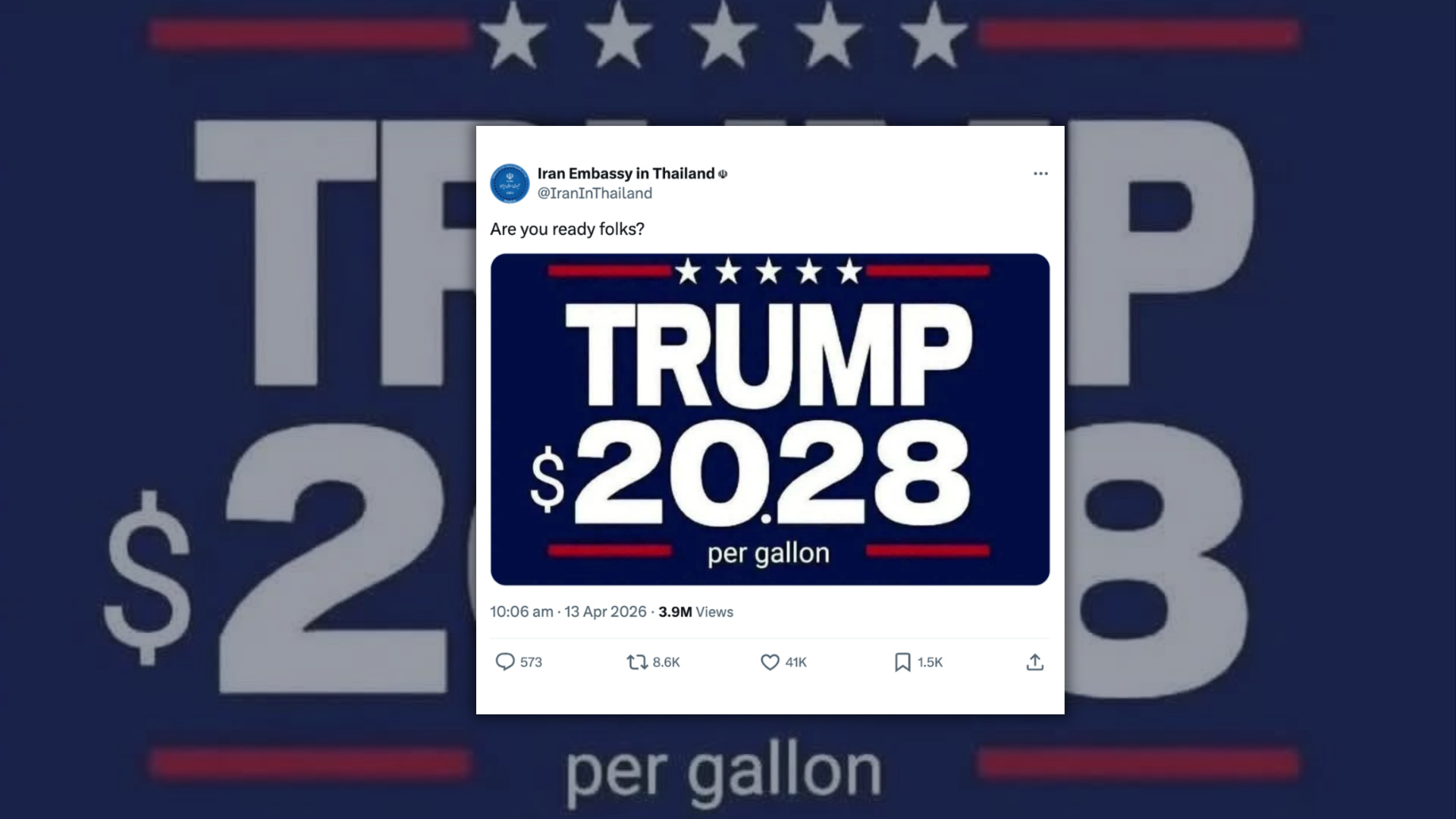
It was not an original creation: the same image was circulating in March on American social media.
And for the U.S. viewers, the messaging and meme tone in which it’s being delivered appears to be effective. A viral reshare of the post joked that “Trump should lift sanctions on Iran so Dems can hire them as their campaign messaging consultants”.
Iranian government working with content creators
Much of the content being shared by Iranian embassies appears to be reshares of third-party material made by pro-Iranian regime creators.
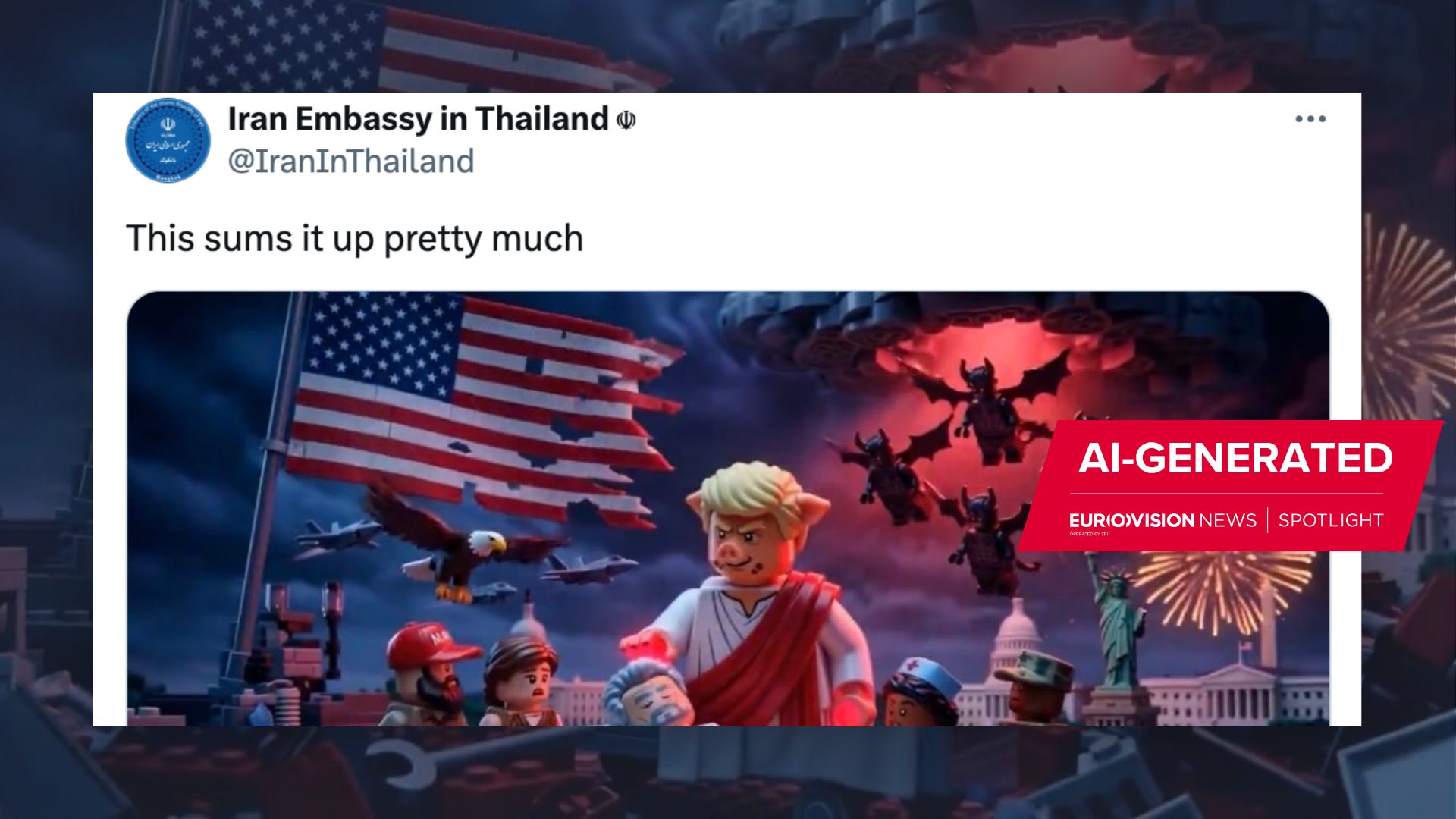
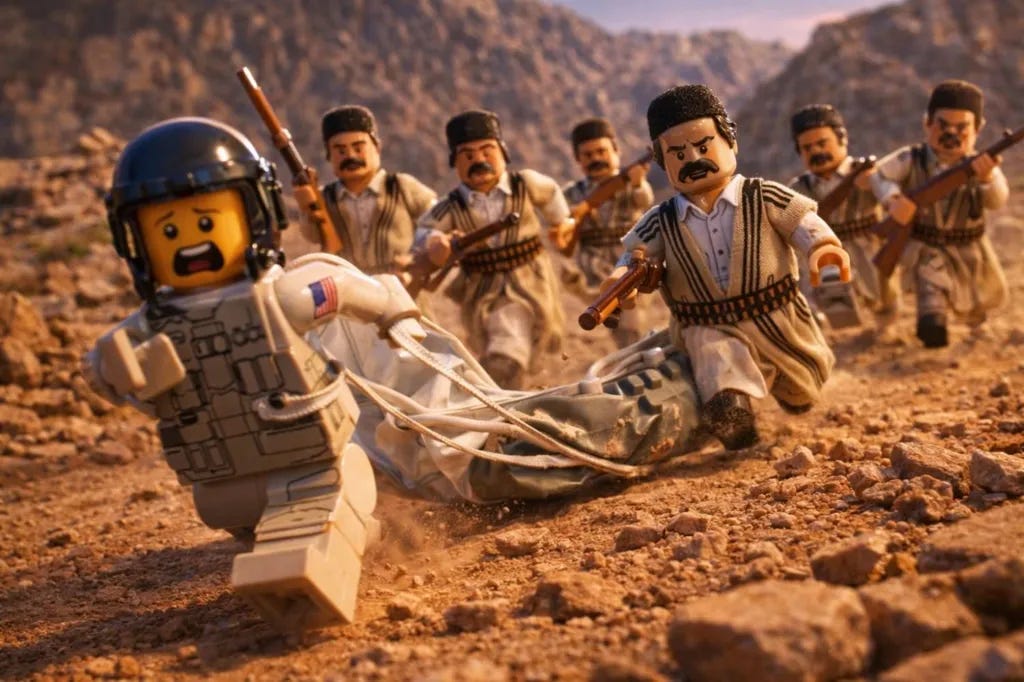
Among the most famous videos in this propaganda battle are the Lego skits, featuring characters depicted as Lego figurines, sometimes with a musical track in the background. The videos are produced and released by an account called Explosive Media. The Explosive Media videos have been shared by the embassies, as well as going organically viral on social media from Explosive Media’s own channels.
A BBC News interview released earlier this week with one of the creators of the Lego videos, known only as Mr Explosive, revealed for the first time that the Iranian regime is a “customer” that has commissioned the small team for a number of projects. In previous interviews, the outlet had said it was “fully independent”.
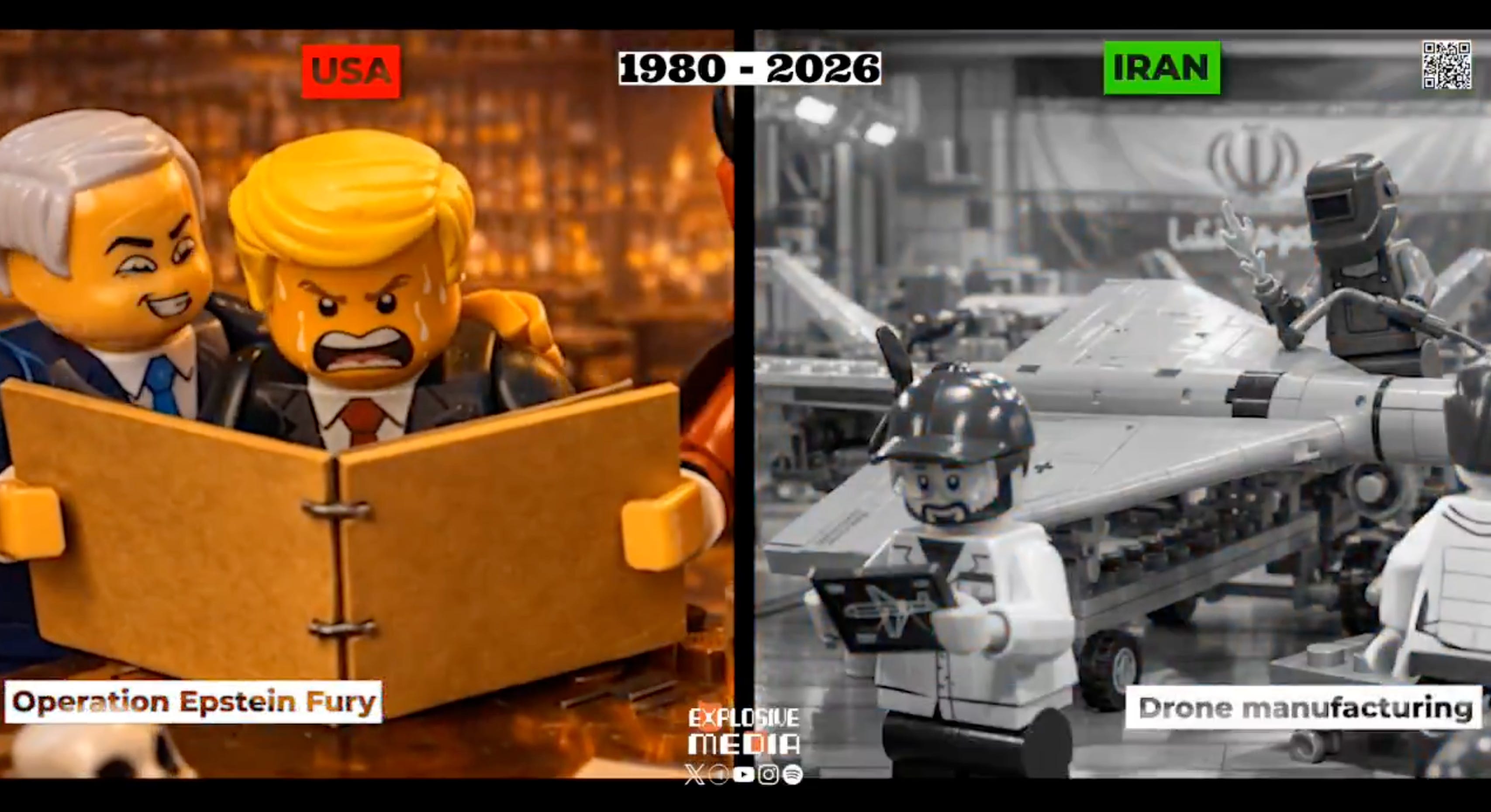
As with much of the other Iranian output, the videos focus on specific political and religious themes. The Epstein files feature heavily, as do specific incidents like Iranian military strikes on areas around the Gulf. The videos often fail to depict the situation accurately, but that has not stemmed their popularity in the English-speaking world.
An internet blackout is still affecting the majority of Iranians. However, Mr Explosive told the BBC that he is able to use “journalist internet” granted by the government. This description tallies with other reports, including from NetBlocks which monitors the blackout, that regime figures and ‘whitelisted’ influencers are allowed to access social media freely.
Claus Valling Pedersen, a researcher in Iranian culture at the University of Copenhagen, told Denmark’s national broadcaster that the decision to use Lego was probably strategic, as they have an innocence that fits the message of ‘good versus evil’. The iconic Danish bricks have as much brand recognition in Iran as they do anywhere else.
Danish news outlets including Spotlight member DR have contacted Lego for a comment, but they did not respond.
YouTube banned Explosive Media’s YouTube account, prompting the Iranian Ministry of Foreign Affairs spokesperson Esmaeil Baqaei to post on X: “In a land that proudly hosts Pixar, DreamWorks Animation, and The Walt Disney Company, an independent animated YouTube channel — which had organically grown by depicting U.S. aggression & warmongering, and garnered millions of viewers — was abruptly shut down!!”
He did not mention that the channel is not entirely independent, and counts the Iranian government as a client.
A new Lego video showed the speed at which the creators are able to react to new events. It poked fun at U.S. Secretary of Defense Pete Hegseth’s onstage prayer, which was actually a passage from Pulp Fiction, a day earlier.
Long-running themes repackaged
Iranian journalist and Eurovision News Spotlight contributor Mahsa Aminolahi said the wider themes dealt with in pro-government content are nothing new, although they have been repackaged for the modern social media audience.
“Iran’s anti-imperialist image or language is not something that Iran has come up with in the past weeks or months. This is something that Iran has identified with since day one of the Islamic revolution,” she said.
“For someone like myself who grew up in Iran and studied there, the language and the message is exactly the same as we’ve heard and seen over decades. It’s just through more relatable images.”
So why are these messages gaining such a foothold in the West now? Aminolahi said that appetite has been building due to recent world events.
“There’s a momentum for leftist, anti-imperialist ideas. Mainly they became louder and more demanding from world leaders after Israel’s campaign in Gaza. Suddenly Iran found a lot of common language with those voices. The audience is already there, it’s just how to package that message.”
“I don’t think Iran has spent a lot of time on tailoring the message. Frankly, the message is very similar to what we’ve seen inside Iran for decades. It’s just the packaging that has changed a little bit.”
Aminolahi said that the success of these videos goes way beyond their creativity and comedic value for people who don’t like Donald Trump; they also appeal due to confirmation bias.
“It resonates because of a lot of factors. A lot of people want to believe that the message they have in mind — let’s say, these anti-imperialist voices that are gaining this momentum — they have no means to understand or they don’t want to understand, for example, human rights abuses in Iran.”
“The idea that ‘this resonates with me, this validates what I think, so this must be the truth’ — that plays a role because of many different world events.”